
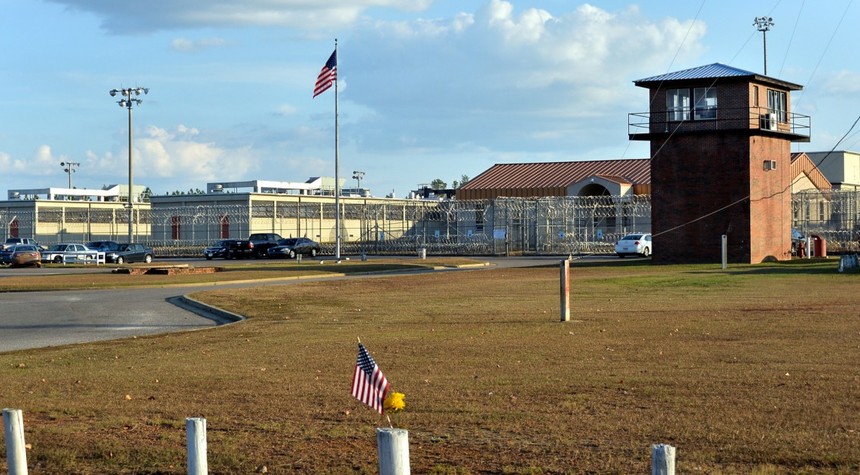
The State of Alabama intends to execute Jeffery Lee by lethal injection Thursday evening, despite a rare Supreme Court intervention last month that prevented his death by nitrogen gas and a 2018 legal settlement that explicitly prohibited the use of lethal injection in his case.
Lee, 49, was convicted of the 1998 fatal shootings of Jimmy Ellis and Elaine Thompson during a pawnshop robbery near Selma. Ellis, the store’s owner, was known locally as an accomplished Elvis Presley impersonator. Thompson, his ex-wife, worked alongside him at the establishment.
The legal complexities surrounding Lee’s execution illustrate the ongoing difficulties states face in administering capital punishment. In 2018, Lee agreed to execution by nitrogen hypoxia as part of a legal settlement in which Alabama pledged not to use lethal injection. At that time, the state had not yet developed a protocol for nitrogen gas execution. Alabama subsequently became the first state to employ this method beginning in early 2024, and has since executed seven inmates using nitrogen hypoxia.
However, witnesses to these nitrogen gas executions have consistently reported disturbing observations. Prisoners have been seen heaving for extended periods, convulsing, and writhing against their restraints. The execution of Kenneth Smith, the first person put to death by this method, took fifteen minutes rather than the brief timeframe state officials had predicted. Steven Tiggleman, Smith’s son, witnessed the execution and described it as the most disturbing experience of his life, comparing it to suffocation by a scuba mask.
The most recent nitrogen execution, that of Anthony Boyd in October, raised further concerns when witnesses reported Boyd gasping for air more than two hundred times. The Reverend Jeff Hood, who served as spiritual adviser to both Smith and Boyd, characterized the nitrogen method as causing victims to drown in a room full of air rather than peacefully losing consciousness as proponents suggested.
Based on these executions, Lee filed suit to prevent Alabama from using nitrogen in his case, arguing that the method induces conscious suffocation that constitutes cruel and unusual punishment. When the Supreme Court unexpectedly blocked the nitrogen execution in June, Lee may have anticipated a broader reprieve. Instead, Alabama reverted to lethal injection, the very method it had contractually agreed not to use in his case.
Lee’s legal team emphasizes that their client is not seeking to permanently avoid execution, but rather insists that the state honor the execution method he selected and that it be carried out in accordance with constitutional protections against cruel and unusual punishment. Lee has also requested execution by firing squad as an alternative, though Alabama law does not authorize this method.
The state reviewed its lethal injection procedures in 2022 following several failed execution attempts, yet continues to maintain it as the primary method of capital punishment. The legal battle now centers on whether Alabama can unilaterally abandon a settlement agreement and employ a method of execution that the condemned prisoner specifically sought to avoid through legal agreement.
Barring last-minute court intervention, the execution is scheduled to proceed Thursday evening, marking yet another chapter in the complex and evolving legal landscape surrounding capital punishment in America.
Related: Canada Seeks Economic Security Through Expanded Partnership with European Union