
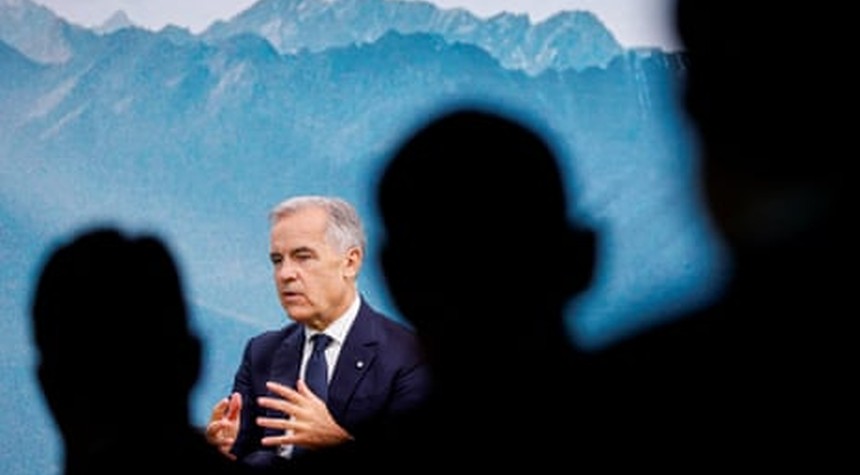
Canadian Prime Minister Mark Carney addressed international investors and government officials at the inaugural Canada Investment Summit on Tuesday, outlining his administration’s strategic pivot toward Europe as tensions with the United States continue to strain longstanding economic relationships between the two North American neighbors.
The prime minister’s remarks reflected a sobering assessment of the current global economic landscape and Canada’s vulnerable position within it. Speaking with the gravity befitting the moment, Carney characterized his nation’s predicament plainly: “The world is becoming more divided and dangerous. Sovereignty and openness are now in tension. Economic integration is being weaponized. Tariffs are used as leverage.”
This assessment comes after eighteen months of deteriorating trade relations with Washington, a period during which the Trump administration’s aggressive use of tariffs has placed substantial pressure on the Canadian economy. The dependence on American markets, long viewed as an asset given geographic proximity and historical ties, has revealed itself as a strategic vulnerability requiring urgent attention.
Canada’s response, as articulated by Carney, rests on two fundamental principles: self-reliance and international partnership. The prime minister positioned Canada as a “safe harbor” for foreign capital while simultaneously pursuing what he termed a “unique security and economic alliance” with the European Union.
The timing of this diplomatic initiative proves significant. Canada stands as the only non-European participant in Europe’s defense procurement initiative, a distinction that provides a foundation for deeper integration. Carney acknowledged that discussions remain in preliminary stages, though he suggested possibilities including visa-free travel and work arrangements between Canada and EU member states.
The European Union appears receptive to these overtures. Carney will serve as guest of honor at the European Parliament’s plenary meeting in Strasbourg this week, where he will attend European Commission President Ursula von der Leyen’s state of the union address on Wednesday. On Thursday, the Canadian prime minister will address members of the European Parliament with von der Leyen present.
European officials have indicated their intention to forge an unprecedented relationship with Canada, one that approaches the closeness of EU membership without formally granting such status. The careful distinction matters for institutional reasons, as Brussels seeks to avoid repeating complications experienced during Brexit negotiations. The four freedoms underlying the European single market—free movement of people, services, goods, and capital—are viewed as indivisible by EU leadership.
Despite Carney’s characterization of current trade difficulties as a “war,” Canadian officials at the summit expressed cautious optimism that their nation’s pivot toward a more globally diversified economic strategy could attract hundreds of billions in new foreign investment. The prime minister’s message emphasized Canada’s position in what he described as a “new global economic order,” one in which traditional alliances no longer guarantee economic security.
The practical implications of this strategic reorientation remain to be determined. Trade relationships built over generations cannot be replaced overnight, and geographic realities ensure that the United States will remain Canada’s primary trading partner for the foreseeable future. However, Carney’s initiative represents a meaningful effort to reduce dependency and create alternative markets for Canadian goods and services.
As this situation continues to develop, the world watches to see whether Canada’s European gambit will provide the economic security and diversification its leadership seeks, or whether distance and institutional complexity will limit the partnership’s practical impact.
Related: Families Separated as Deportees Land in Liberia Thousands of Miles From Home Countries