
American military forces struck three Iranian oil tankers in the Persian Gulf on Saturday following an Iranian ballistic missile attack against two United States Navy vessels, according to U.S. Central Command.
The attacks mark a significant escalation in the ongoing maritime conflict between Washington and Tehran, with American forces now directly targeting the economic infrastructure that sustains the Iranian regime.
An American aircraft carrier and guided missile destroyer successfully evaded multiple ballistic missiles launched by Iran’s Islamic Revolutionary Guard Corps. No American personnel were injured in the Iranian assault, CENTCOM confirmed in an official statement.
In measured retaliation, United States forces permanently disabled two crude oil carriers. The M/T Downy was struck off the coast of Kharg Island, while the M/T Stark 1 was disabled near Jask. American forces destroyed a third vessel, the M/T Kylo, near the Gulf of Oman. The Kylo was not carrying oil at the time of the strike, and its crew was directed to abandon ship before American forces engaged the vessel at multiple points.
Admiral Brad Cooper, commander of U.S. Central Command, articulated the American position with clarity. The United States will impose economic costs exceeding any Iranian aggression, and American forces will not hesitate to destroy Iran’s limited oil fleet if necessary to defend American personnel and interests.
The Iranian Foreign Ministry issued a strong condemnation of the American strikes, characterizing them as illegal aggression and accusing Washington of conducting a naval blockade and economic warfare against Iran. Iranian state media carried a ministry statement claiming the attacks violated the United Nations Charter and constituted both war crimes and threats to international peace and commercial shipping.
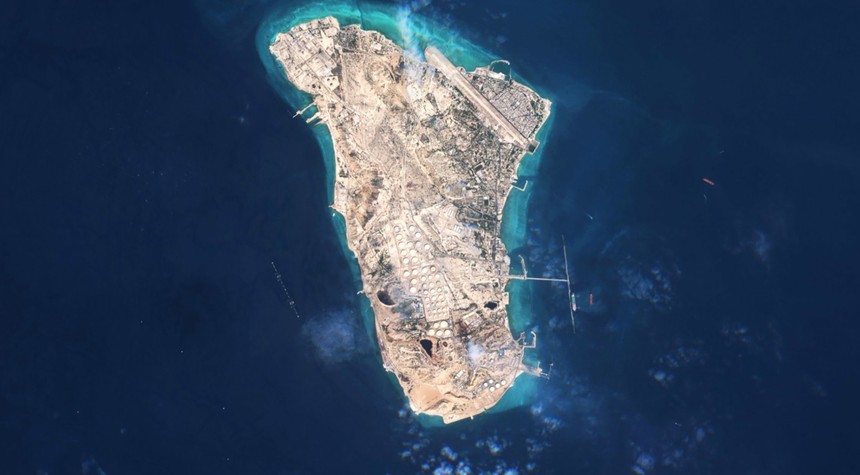
The strategic significance of these events cannot be overstated. Kharg Island, a small but critical piece of territory located fifteen miles off the Iranian coast in the Persian Gulf, serves as the central hub of Iran’s oil industry. The island also houses military capabilities, including air defense systems and underground fortifications. This location has repeatedly emerged as a flashpoint in the escalating conflict between the two nations.
American forces previously struck military targets on Kharg Island in March but deliberately avoided the oil infrastructure. President Donald Trump indicated at that time that the United States could target energy facilities if Iran continued its interference with commercial shipping through the Strait of Hormuz.
The economic implications for Iran are severe. Research analysts have previously characterized Kharg Island as the backbone of Iran’s oil trade infrastructure and the primary gateway for the country’s petroleum reserves. The island’s role in Iranian finances cannot be separated from the regime’s ability to fund its military operations and maintain its grip on power.
Iranian media reported the tanker strike near Kharg Island earlier on Saturday, confirming that crew members were evacuated. No casualties were reported in the Iranian accounts of the incident.
This confrontation represents the latest chapter in a protracted struggle over freedom of navigation in one of the world’s most strategic waterways. The Strait of Hormuz remains a vital artery for global energy supplies, and Iranian attempts to control or disrupt passage through these waters continue to draw decisive American responses.
The question now facing both nations is whether this cycle of attack and retaliation will continue to escalate or whether diplomatic channels can provide an alternative path forward. That is the way it is.
Related: Australia’s Housing Market Cools as Economic Pressures Mount