
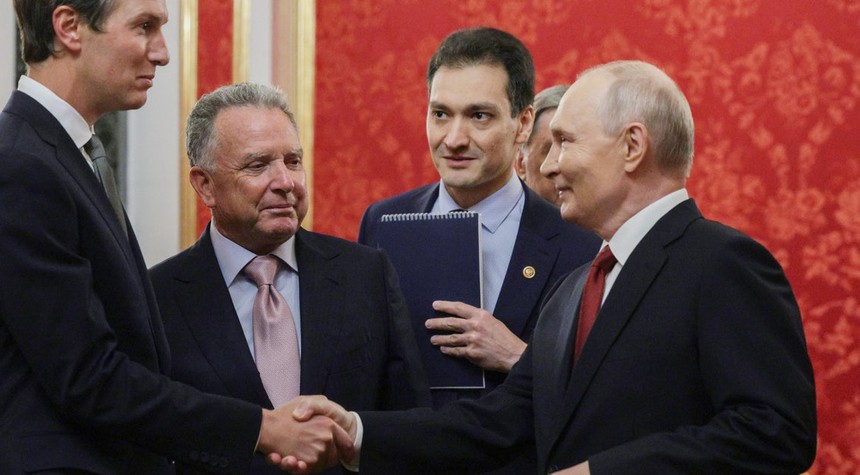
A potentially significant development emerged from Moscow on Saturday as Russia and Ukraine agreed to suspend strikes on their respective capitals during a diplomatic mission led by President Trump’s special envoy Steve Witkoff and senior advisor Jared Kushner. The temporary cessation represents the most tangible progress toward ending the conflict since Russian forces launched their full-scale invasion of Ukraine on February 24, 2022.
The American delegation arrived in Moscow on Saturday for what Kremlin officials characterized as “extremely frank” and “constructive” discussions with Russian President Vladimir Putin. According to Kremlin aide Yuri Ushakov, the meetings reflected thorough preparation by the American team, who presented “a number of ideas on possible routes to a settlement” rather than merely expressing general interest in ending hostilities.
Putin’s decision to halt strikes against Kyiv for three days, beginning Saturday at midnight, was announced by presidential spokesperson Dmitry Peskov. The suspension directly correlates with the delegation’s planned visit to the Ukrainian capital, scheduled for Sunday. In response, Ukrainian President Volodymyr Zelenskyy confirmed his nation’s willingness to refrain from strikes on Moscow through Monday, contingent upon Russian reciprocation.
The coordinated pause in attacks on both capitals, while limited in scope and duration, represents a concrete step beyond the rhetoric that has characterized much of the international community’s engagement with this conflict. Zelenskyy indicated he spoke with the American delegation Saturday afternoon following their arrival in Moscow, demonstrating active coordination among all parties involved.
At the outset of the Moscow meetings, Putin conveyed his gratitude to President Trump through the envoys, describing the situation in Ukraine as “not simple.” This diplomatic understatement acknowledges the complexity of a conflict that has claimed countless lives, displaced millions, and fundamentally altered European security dynamics over the past three years.
Russian envoy Kirill Dmitriev met the American delegation at the Moscow airport, sharing photographs alongside the caption “Welcome to Moscow Peacemakers.” Such symbolic gestures, while secondary to substantive negotiations, suggest a genuine interest in achieving diplomatic progress.
President Trump addressed the mission’s objectives on Friday, expressing cautious optimism about the prospects for peace. The president characterized both Witkoff and Kushner as “great negotiators” and acknowledged the uncertainty inherent in such diplomatic endeavors while maintaining hope for a successful outcome.
This marks the first journey to Ukraine for both envoys since the president’s return to office with an explicit commitment to resolving the conflict. The administration’s decision to dispatch senior advisors with close personal ties to the president signals the priority being placed on achieving a negotiated settlement.
The temporary cessation of strikes, while modest in duration, provides a window for substantive discussions to occur without the immediate backdrop of military operations against civilian centers. Whether this pause can be extended and translated into broader agreements remains uncertain. The international community watches with measured hope that these direct negotiations might finally produce the framework for ending a war that has defied previous diplomatic efforts and fundamentally challenged the post-Cold War international order.
Related: Dolphin Beaten to Death on Spanish Beach as Migration Crisis Intensifies