
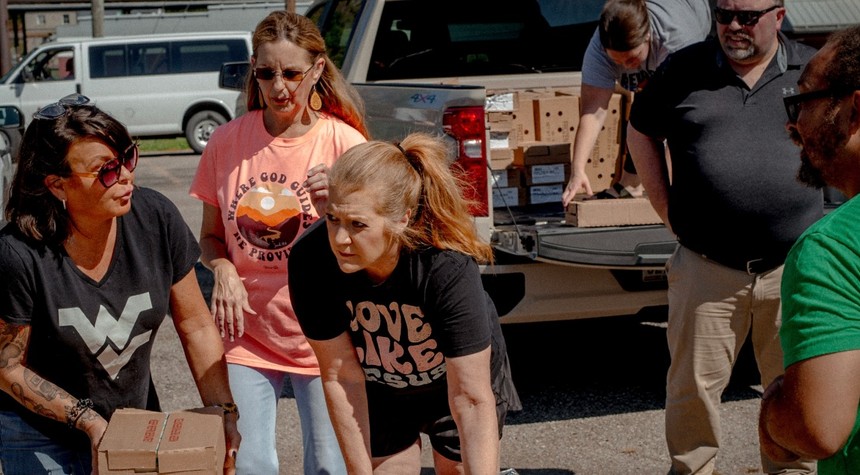
In the small community of Dunlow, West Virginia, Bill Likens faced a troubling calculation as dawn broke over the Appalachian Mountains. Before him stretched a half-mile line of vehicles, their occupants having traveled more than thirty miles through steep, flood-prone terrain to reach his food pantry. As temperatures climbed into the eighties, these families sat with their engines off, conserving precious gasoline while waiting for what might amount to just a few boxes of food.
Likens, fifty-one years old and aided by a cane, serves as director of community outreach for Cabwaylingo Presbyterian Chapel. On this particular morning, he conducted an inventory of pallets being unloaded from a semitruck, counting cartons of eggs and sacks of potatoes to determine how much each waiting vehicle might receive. It has become an algorithm of hunger he finds himself constantly attempting to solve.
“There’s a decent chance we could run out,” Likens acknowledged. “I don’t want them to sit in that line and not get anything, but I don’t have a lot of extra food these days.”
What unfolds in Dunlow reflects a broader national concern. Increasingly, the responsibility of feeding America’s hungry has fallen upon the shoulders of ordinary citizens who have become, in effect, the last line of defense against hunger in what remains the world’s wealthiest nation.
Those working on the front lines of these food distribution networks report facing unprecedented challenges, many of which they attribute directly to policy decisions emanating from Washington. Federal programs designed to supplement food bank inventories have experienced significant reductions under the Trump administration. Simultaneously, restrictions on food stamp programs included in recent Republican legislation have driven up demand at these same facilities. Rising fuel costs, exacerbated by ongoing tensions with Iran, have further strained both household budgets and the operational costs of food banks themselves.
The situation extends well beyond Appalachia’s mountain communities. A comprehensive survey of forty-eight of the nation’s largest food banks across thirty-five states and the District of Columbia revealed that nearly three-quarters reported increased foot traffic over the past year. Those seeking assistance now include working Americans arriving during lunch breaks and elderly citizens overwhelmed by medical expenses.
More than eighty percent of surveyed food banks reported decreased food and funding from the U.S. Department of Agriculture while simultaneously confronting higher transportation costs. In Maine, Good Shepherd Food Bank documented a decline from thirteen million pounds to nine million pounds of USDA food received in a single year. Michigan’s Forgotten Harvest has implemented rationing measures, distributing one bag of potatoes instead of two, two containers of yogurt rather than six.
“People are facing multiple hits to their budgets,” explained Poonam Gupta, a senior research associate at the Urban Institute. “It is really difficult to find a way to continue affording a healthy and nutritious and balanced diet when you just have these constant hits.”
The convergence of reduced federal support, increased demand, and rising operational costs has created what many observers characterize as a perfect storm for America’s food security infrastructure. As policy decisions continue to reshape the federal safety net, the nation watches to see whether private charity can adequately fill the widening gap.
Related: Former Venezuelan President Maduro Faces Torture Charges in Manhattan Federal Court