
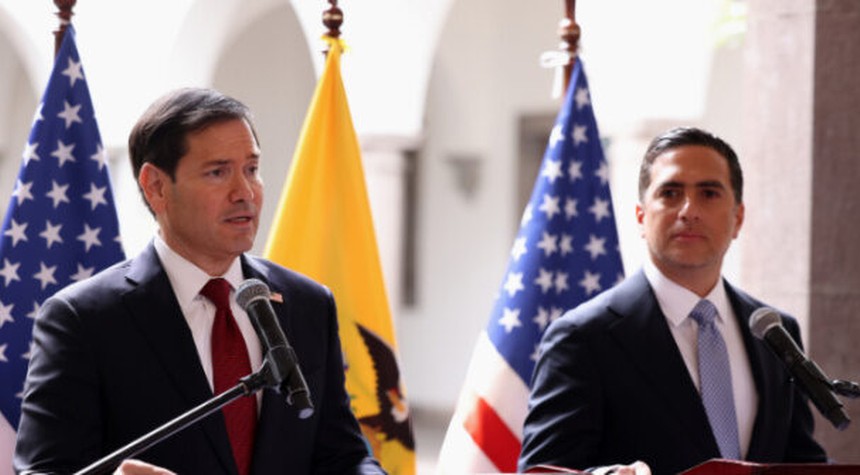
A public disagreement between current and former State Department officials has brought into sharp relief a fundamental debate about American diplomatic priorities in the post-Cold War era.
Deputy Secretary of State Christopher Landau issued a forceful defense of the administration’s diplomatic approach on Saturday, responding to criticism from a former ambassador who served during the Obama years. The exchange centers on where America’s top diplomat should direct his attention in an increasingly complex global landscape.
The former ambassador, who represented the United States at NATO from 2009 to 2013, questioned Secretary of State Marco Rubio’s travel patterns, suggesting his destinations were more appropriate for lower-ranking officials. The criticism implied that America’s chief diplomat should focus primarily on major allied capitals and what the critic termed the most pressing international issues.
Landau, the State Department’s second-ranking official, characterized this criticism as emblematic of a worldview that has consistently failed American interests. In his response, he outlined what he sees as a fundamental flaw in the foreign policy establishment’s thinking: an excessive deference to European opinion at the expense of America’s own hemisphere.
The deputy secretary’s rebuttal challenged the assumption that diplomatic engagement with Latin American nations represents a lower priority for American statecraft. He specifically cited the capitals of Colombia, Ecuador, and Peru as examples of destinations worthy of the secretary of state’s personal attention, pushing back against what he described as a hierarchical view of international relations that privileges European engagement above all else.
According to Landau’s analysis, the establishment approach has produced what he terms a pattern of seeking approval from European capitals while neglecting vital interests closer to home. He suggested this orientation has encouraged policies in Europe that he views as strategically counterproductive, though he did not specify particular initiatives or outcomes in his public statement.
The exchange reveals deeper tensions within American diplomatic circles about strategic priorities. The previous administration’s approach emphasized transatlantic relationships and multilateral institutions as the foundation of American foreign policy. The current administration appears to be recalibrating that focus, placing greater emphasis on the Western Hemisphere and reconsidering traditional assumptions about diplomatic hierarchy.
The Western Hemisphere has long presented both opportunities and challenges for American foreign policy. From migration and drug trafficking to trade relationships and democratic governance, the region’s stability directly affects American interests in ways that European developments often do not. Yet diplomatic attention and resources have frequently flowed toward European capitals, reflecting historical alliances formed during the Cold War and sustained through decades of institutional inertia.
Landau’s pointed response suggests the current administration views this pattern as a mistake requiring correction. His critique extended beyond mere travel itineraries to question what he characterized as the establishment’s record of failure on both sides of the Atlantic.
The former ambassador’s original criticism made no specific reference to NATO or Latin American capitals, focusing instead on the general pattern of the secretary of state’s travel and attention. Landau’s response reframed the debate by making explicit what he sees as the unstated assumptions driving such criticism.
This public disagreement between diplomatic figures underscores the ongoing reassessment of American foreign policy priorities as global conditions continue to evolve.
Related: Three Men Convicted in Murder of Two Australian Brothers and American Friend in Mexico