
A European parliamentarian with firsthand experience of Islamic authoritarianism has issued a stark warning to the American people about developments she observes on United States soil.
Darya Safai, who serves in Belgium’s Chamber of Representatives and leads that nation’s NATO Parliamentary delegation, voiced her concerns this week following events in Dearborn, Michigan. The 51-year-old lawmaker, who personally endured imprisonment under Iran’s theocratic regime, expressed alarm at what she characterizes as the spread of fundamentalist ideology within American borders.
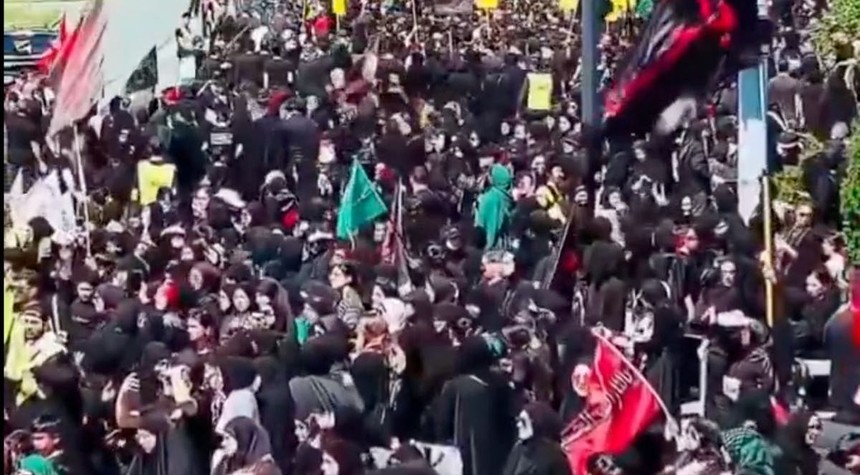
“This is Dearborn, Michigan, America, only 25 years after 9/11,” Safai stated in her warning, which accompanied video footage of the Muslim Arbaeen procession held in Dearborn this week. “As an Iranian who suffered imprisonment under the ayatollahs occupying my beautiful country, I fight against this ideology not only to free Iran but also to preserve Western civilization.”
The procession in question drew thousands of participants, including women and children dressed in traditional black full-body garments, who marched more than one mile through the Michigan city. Local Muslim residents defended the annual event as a peaceful religious observance. One pizzeria owner participating in the procession emphasized that the gathering celebrates freedom and the Islamic principle of universal kindness.
Safai’s statement arrived just two days after Dearborn voters contributed to Abdul El-Sayed’s victory in the Democratic Primary for United States Senate. El-Sayed will face Republican Mike Rogers in the general election this November. Should he prevail, El-Sayed would make history as the first Muslim to serve in the United States Senate.
The timing of these developments, occurring just over two decades after the September 11th attacks, adds weight to Safai’s concerns about the trajectory of certain American communities. Dearborn has long maintained one of the largest concentrations of Middle Eastern immigrants in the United States, making it a focal point for discussions about cultural integration and national security.
Safai’s personal history lends credibility to her warnings. Having experienced the realities of life under Iran’s ayatollahs, she understands the mechanisms through which religious extremism can take hold in a society. Her escape from that system and subsequent rise to political prominence in Europe provides her with a unique perspective on the delicate balance between religious freedom and the preservation of Western democratic values.
The Belgian lawmaker’s concerns reflect a broader debate within Western nations about immigration, religious practice, and cultural cohesion. As Europe grapples with similar questions regarding its own Muslim populations, Safai’s transatlantic warning suggests these challenges transcend any single nation’s borders.
The question facing Americans now is whether such warnings represent legitimate concerns about ideological threats or whether they risk unfairly characterizing peaceful religious observance as dangerous extremism. That distinction remains at the heart of ongoing debates about religious liberty, national security, and the American experiment in pluralism.
What remains undeniable is that the conversation about Islam’s place in Western society continues to evolve, informed by voices like Safai’s who have witnessed firsthand the consequences when religious ideology becomes intertwined with political power.
Related: Korean Peninsula Remains Critical Security Concern Amid Global Tensions