
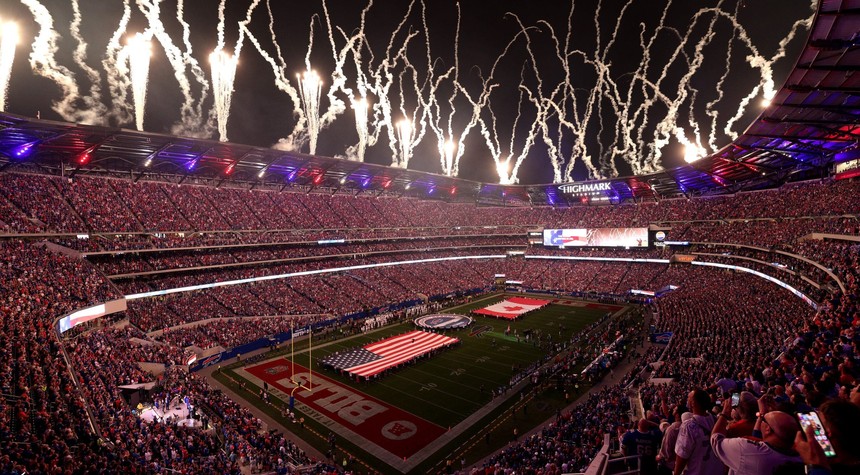
The Buffalo Bills christened their new Highmark Stadium Thursday night with a decisive victory over the Detroit Lions, but the evening’s festivities began with an unexpected controversy that has sparked a broader conversation about national identity and the proper place of patriotic ceremony in American sports.
Before the game commenced, the organization made the decision to honor Canada by having the Barenaked Ladies perform “O Canada” alongside the American national anthem. The choice, while intended to recognize the team’s substantial Canadian fan base, struck many observers as inappropriate for an inaugural game featuring two American teams on American soil.
The optics were particularly striking. As the Canadian alternative rock band delivered their rendition of the northern anthem, broadcasters displayed a massive Canadian flag at one end zone opposite an American flag at the other, creating an equivalence that seemed to miss the fundamental purpose of pre-game anthem ceremonies.
The Buffalo Bills maintain deep commercial ties with Canada. The franchise has cultivated a significant following north of the border for decades, with Canadian fans regularly making the short journey to attend games. The organization even announced a 2026 draft selection from Canada during the broadcast. Furthermore, Bills owner Terry Pegula also owns the Buffalo Sabres hockey team, which performs “O Canada” before every home game, regardless of whether a Canadian team is participating.
However, the context of hockey differs substantially from football. The National Hockey League includes seven Canadian franchises, making the northern anthem a regular fixture that serves a practical purpose. The National Football League contains no Canadian teams whatsoever.
The decision drew swift criticism across multiple platforms, with observers noting the peculiarity of singing a foreign nation’s anthem when no foreign team was present. Even Canadian fans expressed confusion about the gesture, questioning its necessity and appropriateness.
One particularly pointed criticism came from a Marine Corps veteran who emphasized the historical origins and true purpose of the national anthem ceremony in American sports. The tradition, he noted, began in 1918 during World War One, not as entertainment for fans or as a marketing gesture toward international audiences, but as a solemn recognition of American service members fighting overseas.
The Star-Spangled Banner performs a specific function at sporting events. It serves as a moment of collective acknowledgment for those who serve in the United States military, providing the freedom and security that allows such gatherings to occur. This purpose becomes diluted when national anthem ceremonies transform into diplomatic gestures or marketing opportunities aimed at expanding fan demographics.
The controversy surrounding Thursday night’s ceremony does not stem from any animosity toward Canada or Canadians. The United States maintains one of the most peaceful and prosperous international relationships in world history with its northern neighbor. Rather, the objection centers on preserving the integrity and purpose of American patriotic traditions.
As American institutions increasingly embrace gestures of international inclusivity, this incident raises important questions about where such gestures belong and when they risk undermining the specific meanings of longstanding traditions. The national anthem ceremony at sporting events carries historical weight and purpose that transcends mere entertainment value or audience demographics.
The Buffalo Bills organization may have intended their dual-anthem ceremony as a gesture of goodwill. Instead, it has ignited a conversation about maintaining the distinct character of American institutions in an age that often prizes symbolic inclusivity above historical purpose and national identity.
Related: Nine Women Found Dead in Two Months Outside Johannesburg Amid Femicide Crisis