
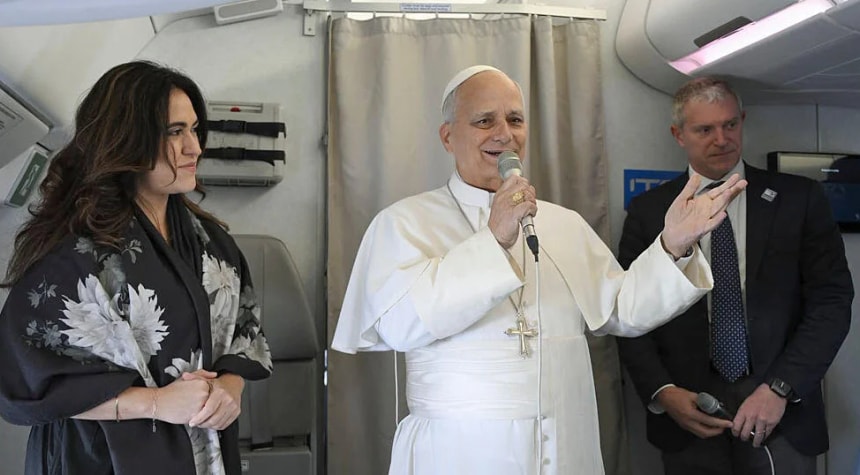
Pope Leo XIV addressed reporters Friday aboard the papal aircraft, defending his historic decision to cast a ballot in the recent United States midterm elections and affirming his belief in the fundamental duties of democratic citizenship. The American-born pontiff, en route to a demanding twelve-day tour of Latin America, became the first sitting pope to vote in an American election.
The seventy-one-year-old leader of the world’s 1.3 billion Catholics submitted a mail-in ballot to his native Chicago, the Vatican confirmed last week. His decision has prompted both praise and criticism from various quarters, raising questions about the intersection of spiritual authority and temporal political participation.
"I am proud to be an American and to exercise my right to vote," Pope Leo stated when questioned by the traveling press corps. He carefully avoided any discussion of election outcomes or partisan implications, instead emphasizing principles of civic engagement that have characterized his public life since long before his elevation to the Chair of Saint Peter.
The pontiff, born Robert Prevost, maintained a consistent record of electoral participation throughout his career in the Church. Vatican records indicate he voted regularly during his nearly two decades of service as a missionary and later as a bishop in Peru, where he also holds citizenship. Voting records show he participated in five primary elections since 2000, casting ballots in both Democratic and Republican primaries depending on the races and candidates in question.
The Holy See’s press office released a statement emphasizing that the pope has exercised his right to vote as a United States citizen whenever eligible to do so. The statement further articulated the Holy Father’s belief in both the right and duty of citizens to participate in democratic processes, framing the decision within Catholic social teaching on civic responsibility.
United States federal law permits American citizens to retain their citizenship even while employed by foreign governments, a provision that extends to those serving in the unique capacity of leading the universal Church from Vatican City.
The pope’s journey to Latin America comes merely three weeks after doctors removed a cancerous tumor from his right lung. On October thirteenth, surgeons excised the lower lobe of his right lung after discovering a malignant adenocarcinoma during a routine abdominal examination. The pontiff was discharged from hospital four days later, with physicians declaring the procedure successful and without complications.
"I am very happy to be here myself," Leo told the gathered journalists in the rear cabin of the aircraft. "I know some people were doubtful about this trip taking place. I confess that from the first day, I had no doubt. I was convinced that this trip had to go forward."
The pope credited his rapid recovery to early detection, skilled medical care, and what he described as a generally healthy lifestyle. He was cleared for travel on October twenty-sixth, just two weeks following the surgery. With characteristic good humor, he acknowledged he had not yet returned to playing tennis but expressed confidence that he would resume the sport soon.
The pontiff’s willingness to discuss both his political participation and his medical condition reflects a papacy marked by transparency and direct communication. As he embarks on this ambitious tour of three Latin American nations, Pope Leo XIV demonstrates that neither the weight of the papal office nor recent health challenges will prevent him from fulfilling what he views as his dual obligations: to shepherd the global Catholic faithful and to exercise the rights and responsibilities of American citizenship.
Related: Stock Market Plunges on Fears of Congressional Interference with AI Infrastructure