
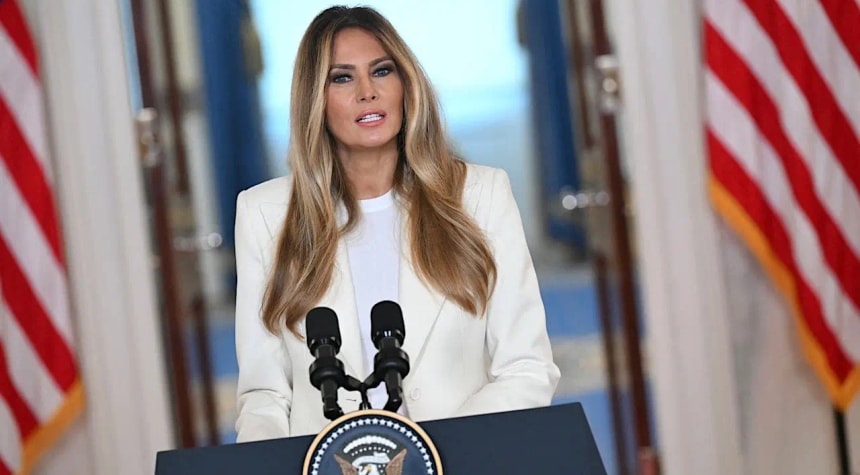
In a development that carries both immediate humanitarian significance and potentially broader implications for the conflict in Eastern Europe, the White House played host Thursday to a remarkable gathering. First Lady Melania Trump stood alongside diplomatic representatives from Russia and Ukraine to discuss a ceasefire in the Russian-occupied Oleshky region, a development the parties involved are characterizing as perhaps the most significant step toward peace since hostilities began in 2022.
The scene itself marked an extraordinary moment in American diplomacy. A Russian envoy speaking from the White House, standing beside Ukrainian representatives, discussing cooperation rather than conflict. Such moments have been exceedingly rare in recent years, and the import of this gathering should not be understated.
Mrs. Trump, speaking with measured deliberation, framed the ceasefire in terms that transcended immediate political considerations. "We have chosen humanity over war," she stated. "Undeniably, the lives of innocent people must transcend the division of war." She expressed hope that Oleshky might serve as what she termed "a spark in a world of darkness capable of illuminating the best in humanity."
According to the First Lady, her involvement began in September when she became aware of the humanitarian crisis developing in the region. She subsequently directed her representative, Marc Beckman, to engage with both nations on her behalf. Both Russia and Ukraine, she reported, agreed to work with her as an exclusive intermediary to establish not merely a ceasefire but also mechanisms for delivering humanitarian aid and creating safe evacuation routes for civilians trapped in the conflict zone.
The Russian special envoy, Kirill Dmitriev, acknowledged President Donald Trump’s broader efforts toward ending the fighting and noted that Russian President Vladimir Putin had responded favorably to various American initiatives, including prisoner exchanges and humanitarian measures. His remarks, while diplomatic in nature, represented a notable warming in rhetoric from Moscow toward Washington.
David Arakhamia, who leads Ukrainian President Volodymyr Zelenskyy’s political party, offered perhaps the most revealing assessment of what has transpired. He characterized the Oleshky ceasefire as the biggest deescalation since the war’s inception and noted a dramatic shift in attitudes. Initially, he reported, only five percent believed success was possible. Now those percentages have reversed entirely.
The practical impact on the ground tells its own story. Arakhamia described how residents of the affected area initially remained skeptical, staying in their homes. Gradually, as the ceasefire held, they ventured out, first around their neighborhoods, then to assess damaged homes and retrieve belongings. This cautious emergence from the shadow of war carries emotional weight that statistics alone cannot capture.
The fate of occupied territories in southern Ukraine remains among the most contentious issues in any potential broader peace settlement. The Oleshky ceasefire, whatever its limitations, provides both sides with what Arakhamia called "the little mechanics of how to keep the peace when the peace comes." In essence, it serves as a working laboratory for larger agreements that might follow.
Whether this regional ceasefire proves to be the spark Mrs. Trump envisions or merely a temporary pause in a longer conflict remains to be seen. What can be said with certainty is that civilians in the Oleshky region have been granted reprieve from immediate danger, and that humanitarian considerations have, at least momentarily, taken precedence over military ones. In a conflict that has generated so much suffering, even modest progress deserves acknowledgment, while maintaining appropriate skepticism about what broader peace might require.
Related: Florida Representative Luna Rejects Foreign Policy PAC Funding After Close Reelection