
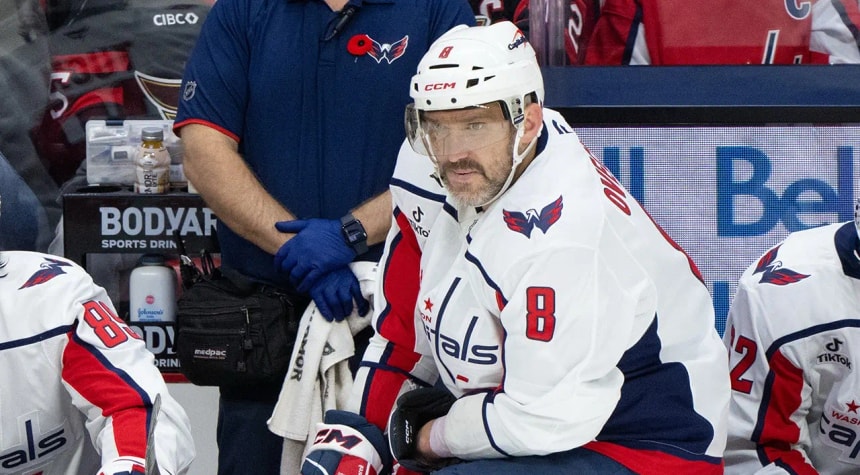
Ukrainian-Canadian demonstrators gathered in significant numbers Tuesday evening as Washington Capitals forward Alex Ovechkin took to the ice in Ottawa for what marks his final season in professional hockey. The protests underscored a continuing international debate over Russian athletes’ participation in Western sporting events, a question that remains unresolved more than two years after Russia’s invasion of Ukraine.
Ovechkin, who has publicly expressed support for Russian President Vladimir Putin over the years, appeared uncertain when asked about the demonstrations prior to the game. The Ukrainian Canadian Congress had formally requested last month that Canadian authorities prohibit Ovechkin and other Putin supporters from entering the country, citing what they characterize as Russia’s ongoing campaign against Ukraine.
The controversy extends well beyond a single hockey player. The upcoming World Junior Championships, scheduled to take place in Alberta next month, have become a focal point in the larger question of how Western nations should respond to Russian athletic participation. Canadian officials initially stated that Russian players would be barred from the tournament, despite a ruling from the Court of Arbitration for Sport that lifted previous restrictions.
The International Ice Hockey Federation has found itself in an awkward position, publicly disagreeing with the court’s decision while acknowledging it must take steps toward compliance. This creates a peculiar situation where sporting bodies must balance their own institutional preferences against international legal rulings.
Prime Minister Mark Carney had previously stated his intention to prevent Russian athletes from competing in Canadian events. Ovechkin, for his part, maintained a diplomatic stance regarding the Prime Minister’s position, suggesting that fans would prefer to see the world’s best young talent compete regardless of nationality. Whether this represents genuine belief or careful public relations remains a matter of interpretation.
The NHL’s all-time leading goal scorer noted that ultimate decisions rest with government officials rather than players. This abdication of personal responsibility, while perhaps politically prudent, illustrates the complex position Russian athletes find themselves in when their government’s actions become subject to international condemnation.
Russia has faced systematic exclusion from international hockey competitions since its February 2022 invasion of Ukraine. The country was absent from Olympic hockey competition earlier this year and was not included in the NHL’s Four Nations Face-Off tournament. These exclusions represent a significant departure from historical sporting norms, where athletic competition often proceeded regardless of political tensions.
Multiple European nations, including Sweden, Finland, the Czech Republic, Norway, Latvia, and Denmark, have formally committed to boycotting matches against Russian teams for the duration of the conflict in Ukraine. Germany has suggested it may withdraw as host of the 2027 men’s world championships if Russian participation is permitted.
President Putin has responded through official channels, characterizing these restrictions as discriminatory actions against Russian athletes. The Russian government maintains that sports and politics should remain separate spheres, a position that carries historical irony given the Soviet Union’s extensive use of athletic achievement for political purposes during the Cold War.
As this situation continues to evolve, it raises fundamental questions about the role of individual athletes in representing nations whose governments engage in actions the international community condemns. There are no easy answers, only difficult choices that will set precedents for years to come.
Related: Former President Biden Confronted by Protesters During Visit to Dublin