
The debate over immigration policy has intensified in Australia, with starkly different visions emerging about what serves the national interest. At the center of this disagreement lies a fundamental question: does reducing immigration strengthen or weaken an economy?
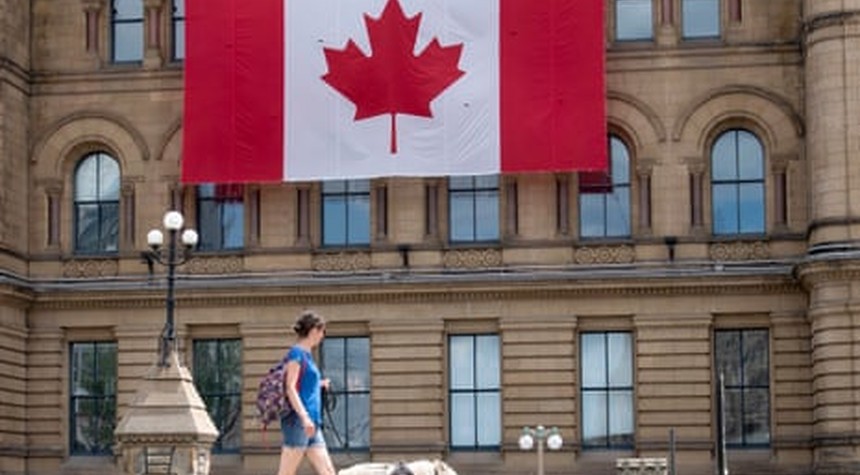
Canada, a nation bearing remarkable similarities to Australia in size, culture, and economic structure, is currently conducting what amounts to a real-world experiment. The results thus far suggest caution is warranted.
Pauline Hanson’s One Nation party has proposed cutting temporary migrants in Australia by more than 750,000 over three years, targeting international students and family members of skilled migrants. This would require net overseas migration to turn negative for three years before establishing an ongoing cap of 130,000 persons annually.
The current Labor government maintains a longer-term target of 225,000 for net overseas migration, considerably below the most recent official estimate of 292,000 for the year ending in March. Home Affairs Minister Tony Burke has characterized One Nation’s proposal as potentially devastating to Australian services and the broader economy.
Hanson has pointed to Canada as evidence that living standards improve when migration is reduced. The North American nation has indeed implemented dramatic changes to its immigration system, though the economic consequences appear more complex than either side of the Australian debate may care to acknowledge.
Canadian policymakers have pursued a different approach than the specific numerical targets Hanson proposes. Rather than focusing solely on net overseas migration figures, Canada has implemented multiple policies designed to reduce temporary migrants as a share of total population from a peak of 7.6 percent in 2024 to 5 percent. This has been accomplished through reduced temporary arrivals, particularly among international students, more stringent requirements for extending stays, and conversion of some temporary migrants to permanent status.
The results have been dramatic. Annual population growth in Canada has decelerated from 3.1 percent in early 2024 to merely 0.5 percent currently.
However, the economic adjustments accompanying this shift merit serious consideration. The CD Howe Institute, a respected Canadian research organization, recently issued a report titled “Resetting Expectations” that examines the country’s economy in this lower immigration era.
The institute’s analysis, conducted by researchers Don Drummond and Parisa Mahboubi, projects that employment in Canada could decline this year and next. Real GDP growth in 2026 may reach no more than 0.5 percent, they forecast, with long-term average growth “little more” than 1 percent.
These projections present a sobering picture of economic adjustment. While proponents of reduced immigration argue that per capita measures of prosperity matter more than aggregate growth figures, there remains legitimate concern about what falling employment means for individual Australians seeking work.
The Canadian experience suggests that reducing immigration levels produces tangible economic consequences that extend beyond abstract statistics. Businesses relying on labor supply face adjustments. Growth rates decline. Employment markets contract.
Whether such adjustments constitute a necessary correction to restore sustainable living standards or an unwarranted economic disruption depends largely on one’s perspective regarding Australia’s current trajectory. What remains clear is that the Canadian experiment offers real data rather than speculation about what reduced immigration means for a comparable economy.
As Australia confronts this debate, policymakers would do well to study Canada’s experience carefully. The evidence suggests that immigration reduction delivers neither the economic catastrophe some predict nor the immediate prosperity gains others promise. Instead, it appears to require a period of significant economic adjustment whose ultimate benefits or costs may take years to fully materialize.
Related: EPA Warns Cyberattacks on American Water Systems Have Surged Several-Fold