
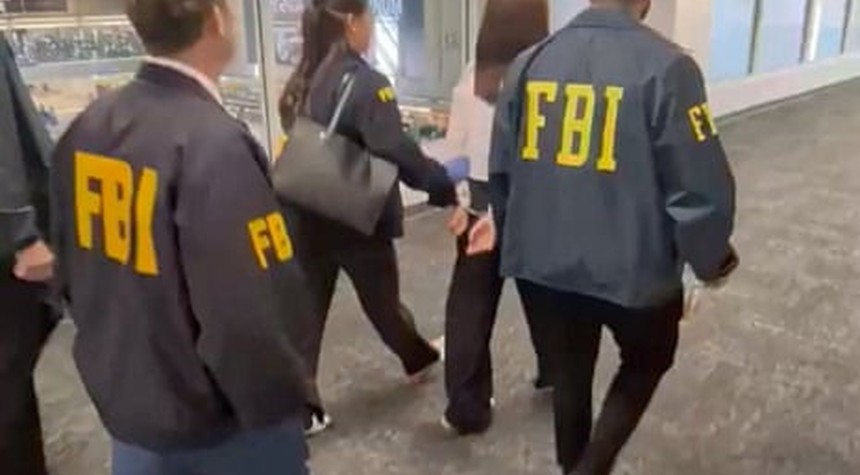
Federal authorities arrested a California woman at Los Angeles International Airport on Sunday, charging her with conducting surveillance operations against the son of Taiwan’s president on behalf of Chinese officials. The case represents another troubling chapter in Beijing’s apparent campaign of transnational repression against those connected to the island democracy.
The FBI apprehended Wanying Zhang, 34, also known as Heather, moments before her scheduled departure to China. Authorities charged the Irvine resident with acting as an unregistered foreign agent, a serious offense that underscores the persistent nature of Chinese intelligence operations on American soil.
According to federal prosecutors, Zhang surveilled a son of Taiwanese President Lai Ching-te, who resides in the United States. While the FBI initially declined to identify the alleged target by name, subsequent reporting identified him as Lai Ting-yu. The Justice Department alleges Zhang traveled to Seattle earlier this year under direction from Chinese officials, where she gathered photographs, video footage, and license plate information concerning the Taiwanese president’s son and his family.
Bill Essayli, first assistant United States attorney for the Central District of California, stated that Zhang employed tradecraft techniques designed to avoid detection throughout her surveillance activities. Critically, she never notified Washington that she was operating on behalf of a foreign government, as required by law.
Taiwan’s presidential office responded swiftly to news of the arrest, characterizing Zhang’s alleged actions as a clear example of transnational repression. Presidential spokesperson Karen Kuo expressed gratitude to the American government for protecting Taiwanese citizens while delivering a forceful condemnation of Beijing’s approach.
“Our country expresses the strongest condemnation of such barbaric conduct that disregards human rights and the sovereignty of nations,” Kuo stated.
The timing and nature of this alleged operation warrant serious consideration. President Lai and his Democratic Progressive Party have consistently championed Taiwan’s distinct identity from mainland China, a position that regularly provokes Beijing’s ire. The Chinese government maintains that Taiwan represents Chinese territory, despite the island’s separate governance, democratic system, and distinct national identity. For his part, President Lai has maintained that only the Taiwanese people possess the authority to determine their future.
China’s foreign ministry has not responded to requests for comment regarding the charges against Zhang.
The case illuminates the complex relationship between Washington and Taipei. While the United States maintains no formal diplomatic ties with Taiwan, America serves as the island democracy’s most important international partner and primary weapons supplier. This delicate balance allows Washington to support a fellow democracy while managing its complicated relationship with Beijing.
Zhang is scheduled to appear Monday in federal court in Los Angeles. It remains unclear whether she has retained legal counsel.
This arrest follows a pattern of Chinese intelligence activities targeting individuals connected to Taiwan, particularly those associated with the island’s pro-independence political leadership. The case serves as a reminder that espionage operations continue unabated on American territory, often targeting residents with connections to nations that Beijing considers within its sphere of influence.
As tensions between China and Taiwan persist, such incidents underscore the real-world consequences of geopolitical competition and the lengths to which Beijing will apparently go to monitor those it considers adversaries. For Taiwan’s leadership and their families, the message is clear: Beijing’s reach extends far beyond the Taiwan Strait.
Related: State Department Accuses Senate Democrats of Grandstanding Over Venezuela Oil Briefing