
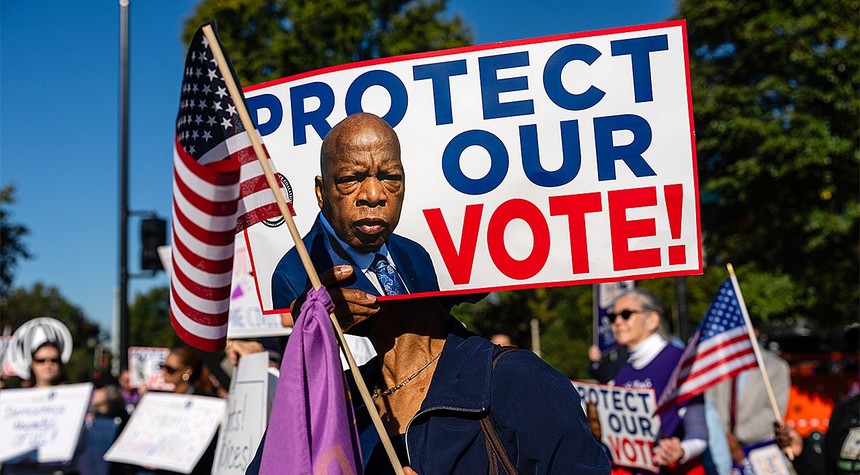
Louisiana has suspended its May congressional primary elections following a Supreme Court ruling Wednesday that struck down the state’s current congressional district map, marking a significant development in the ongoing national debate over redistricting and voting rights.
Republican Governor Jeff Landry and Attorney General Liz Murrill announced Thursday that the High Court’s decision carries immediate and consequential ramifications for the state’s electoral process. The ruling invalidated a congressional map that had been at the center of legal controversy over a majority Black congressional district.
“The historic Supreme Court victory for Louisiana has an immediate consequence for the State,” the officials stated in their joint announcement. They explained that while the Supreme Court had previously stayed an injunction preventing enforcement of the current congressional map, that stay automatically terminated with Wednesday’s decision. As a result, Louisiana now finds itself legally enjoined from conducting congressional elections under the existing district boundaries.
The development represents the latest chapter in what has become a nationwide battle over congressional redistricting, with both major political parties engaged in intensive legal and legislative maneuvering to shape electoral maps in their favor. The implications extend well beyond Louisiana’s borders, as similar disputes continue to unfold across the country.
In Florida, a separate redistricting matter has drawn attention, with Lieutenant Governor Jay Collins discussing the state’s newly approved congressional map. That map could potentially secure four additional House seats for Republicans, illustrating the high stakes involved in these redistricting battles as both parties position themselves for future electoral contests.
The Louisiana situation now presents state officials with the complex task of redrawing congressional boundaries in compliance with the Court’s ruling while maintaining an electoral timeline that allows voters to participate in upcoming congressional races. The suspension of the May primaries suggests that state officials recognize the need for adequate time to complete this process properly, rather than rushing forward with a map the courts have deemed invalid.
This case underscores the continuing tension between state sovereignty in managing elections and federal oversight intended to protect voting rights. The Supreme Court’s involvement in these matters reflects the constitutional significance of ensuring fair representation while respecting the federalist principles that grant states substantial authority over their electoral processes.
As Louisiana works to resolve its redistricting challenge, other states watch closely. The outcome will likely influence how similar disputes are handled elsewhere, particularly in states where demographic changes and political considerations intersect with questions of voting rights and representation.
The postponement of Louisiana’s congressional primaries serves as a reminder that the fundamental architecture of American democracy—how districts are drawn and how representation is allocated—remains subject to rigorous legal scrutiny and ongoing debate. What happens next in Louisiana may well set precedents that resonate throughout the nation’s electoral landscape for years to come.
Related: German Broadcaster Honors Jailed Media Mogul Who Defied Beijing