
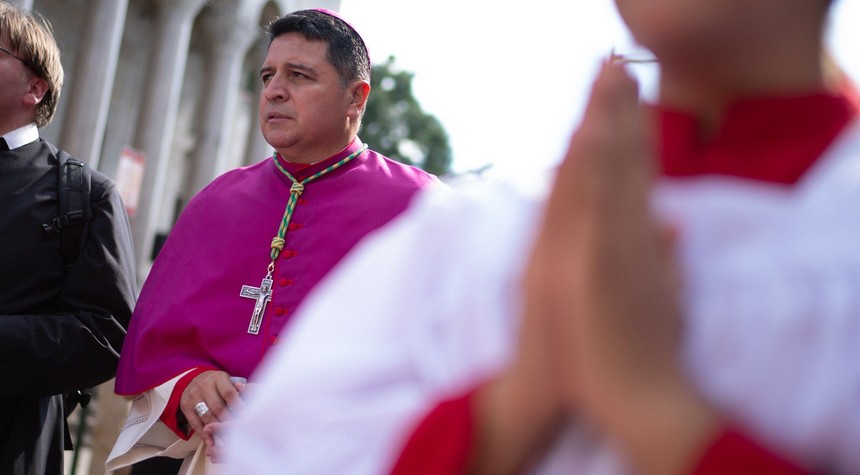
The Vatican’s appointment of a former illegal immigrant to lead West Virginia’s Roman Catholic diocese has sparked debate at the intersection of faith, immigration policy, and American sovereignty.
Pope Leo XIV has nominated Bishop Evelio Menjivar-Ayala to serve as bishop of the Diocese of Wheeling-Charleston, which encompasses all of West Virginia. The appointment comes at a time of heightened tensions between the Vatican and Washington over immigration enforcement and the treatment of refugees.
Bishop Menjivar-Ayala’s personal history adds considerable weight to the appointment. As a teenager fleeing the guerrilla warfare that ravaged El Salvador during the 1980s, he made several attempts to enter the United States. He ultimately succeeded when smugglers transported him across the border at San Ysidro, California, concealed in the trunk of a car.
The bishop has been an outspoken critic of increased immigration enforcement measures under the Trump administration. He has characterized these policies as human rights concerns and engaged in public disagreement with administration officials, including border czar Thomas Homan, who is himself a practicing Catholic.
The appointment has generated substantial commentary, particularly given West Virginia’s political demographics. The state voted for President Trump by a margin of 42 points and maintains a population that is over 90 percent white. Some observers have questioned whether the Vatican intended to send a message to Washington through this selection.
Tim Bishop, spokesman for the Wheeling diocese, firmly rejected such interpretations. He emphasized that Bishop Menjivar-Ayala’s appointment represents a blessing to West Virginians and praised the clergyman’s pastoral work and years of service to the faithful.
“Bishop Evelio came to America some time ago looking for a better life and better opportunities, and thank God he did because he will shepherd the faith of our diocese,” Bishop stated.
The spokesman went further, dismissing suggestions of political motivation behind the appointment. “Any insinuation that the Holy Father made this or any other appointment in any way to increase vitriol or insinuate that it gets back at the president of the United States is absurd,” he said, though he clarified he was not speaking on behalf of Pope Leo XIV.
Bishop offered a pointed reminder of the Church’s traditional stance on political matters, noting that the Roman Catholic Church “worries about the lamb, not the elephant or the donkey.”
Media outlets in both the United States and France have highlighted the appointment in the context of Pope Leo XIV’s reported concerns about American immigration enforcement policies. The timing has not escaped notice, coming as President Trump has reaffirmed his administration’s position that Iran cannot be permitted to develop nuclear weapons.
The appointment raises questions that extend beyond immigration policy to fundamental issues of national sovereignty, religious authority, and the role of personal experience in shaping pastoral leadership. For the Catholics of West Virginia, a bishop who understands hardship and displacement firsthand will now guide their spiritual lives. For observers of the relationship between church and state, the appointment serves as another chapter in an ongoing dialogue about borders, mercy, and the meaning of sanctuary.
Related: Investigation Reveals Two Billion Dollar Network Behind May Day Protests