
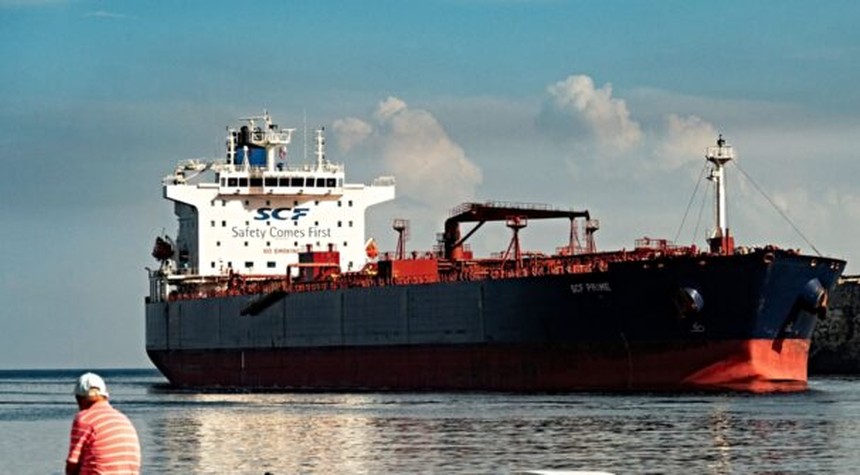
The communist government in Havana has begun seeking oil supplies from West Africa as Venezuelan shipments have dried up under sustained pressure from the Trump administration’s sanctions campaign.
According to energy analyst Jorge Piñón of the University of Texas, the Mia Grace, an oil tanker registered under the Marshall Islands flag, departed from Lomé, Togo, on Monday bound for the Cuban capital. The vessel is expected to arrive in Havana on February 4.
Based on the ship’s maximum capacity of 50,000 tons and monitoring data from maritime tracking services, Piñón determined the tanker appears to be carrying a partial load. While the exact nature of the cargo remains uncertain, the energy specialist indicated it most likely consists of either diesel fuel or fuel oil. His calculations suggest the vessel could be transporting approximately 314,500 barrels of diesel or 280,500 barrels of fuel oil.
The significance of Togo’s role in this transaction warrants examination. Though the West African nation does not possess oil refining capabilities, it has developed substantial infrastructure for refined petroleum products, serving as a regional hub for maritime logistics and fuel transit operations.
Piñón suggested the shipment likely represents a cash purchase arranged by Cubametales, the state-owned enterprise responsible for Cuba’s petroleum imports and exports, possibly facilitated through European intermediaries. This circuitous arrangement reflects the increasingly complex methods the Castro regime must employ to secure essential energy supplies.
The island nation’s energy situation has become increasingly precarious. After more than six decades under communist rule, Cuba’s power generation infrastructure exists in a state of near-complete deterioration. The regime depends almost entirely on imported fuel to maintain even minimal electrical service for its population. These imports have historically come from Venezuela’s socialist government and, more recently, from Mexico.
The shift to African sources represents a notable development in Cuba’s energy procurement strategy. Venezuela, once a reliable supplier to its ideological ally, has seen its own oil production collapse under the weight of socialist economic policies and international sanctions. The Trump administration’s sustained pressure campaign has effectively severed this crucial supply line.
During his first term, President Trump imposed sanctions on Cubametales as part of a broader effort to restrict the Cuban regime’s access to foreign currency and essential resources. These measures have forced Havana to seek alternative suppliers willing to risk potential American sanctions for conducting business with the communist government.
The current situation underscores the fundamental failures of centrally planned economies. What was once a functioning electrical grid has been reduced to ruins through decades of mismanagement and ideological rigidity. The Cuban people now face regular blackouts and energy shortages while their government scrambles across continents to secure basic fuel supplies.
As the Trump administration continues its maximum pressure approach, the Castro regime finds itself increasingly isolated and desperate for the most basic necessities required to keep the lights on.
Related: Young Australian Boy Fights for Life After Sydney Harbor Shark Attack