
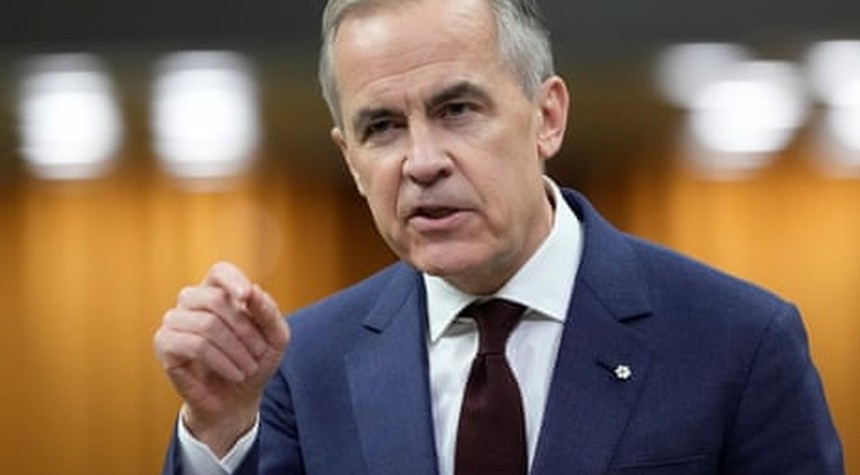
Canadian Prime Minister Mark Carney delivered a sobering assessment to his nation this weekend, declaring that the country’s historically robust economic relationship with the United States has transformed from a strategic advantage into a dangerous liability requiring immediate correction.
In a ten-minute video address, Carney outlined his government’s strategy to strengthen Canada’s economy through new investment attraction and trade agreements with nations beyond its southern neighbor. The message marked a significant departure from decades of Canadian policy that prioritized the bilateral relationship above all other economic considerations.
“The world is more dangerous and divided,” Carney stated plainly. “The United States has fundamentally changed its approach to trade, raising its tariffs to levels last seen during the Great Depression. Many of our former strengths, based on our close ties to America, have become weaknesses. Weaknesses that we must correct.”
The prime minister’s remarks carry particular weight given his distinguished career as a central banker, having led both the Bank of Canada and the Bank of England. His credentials lend credibility to an analysis that many Canadians are only now beginning to accept as reality rather than political rhetoric.
Carney specifically cited the impact of tariffs imposed by President Donald Trump on Canadian workers in the automotive and steel sectors. These industries, long integrated across the border through supply chains built over generations, now face unprecedented disruption. The prime minister noted that businesses throughout Canada are postponing investment decisions, paralyzed by what he termed “the pall of uncertainty that’s hanging over all of us.”
The economic concerns exist alongside growing Canadian frustration with President Trump’s repeated suggestions that Canada should become the fifty-first American state. These comments, dismissed by some as mere negotiating tactics, have nevertheless struck a nerve with Canadians across the political spectrum who view them as dismissive of their nation’s sovereignty.
Carney promised regular updates to Canadians regarding his government’s diversification efforts, emphasizing a commitment to candor that stands in contrast to previous administrations’ tendency toward optimism. “Security cannot be achieved by ignoring the obvious or downplaying the very real threats that we Canadians face,” he said. “I promise you I will never sugarcoat our challenges.”
This is not the first instance of tension between Carney and the Trump administration. During January’s World Economic Forum in Davos, Switzerland, the Canadian leader received widespread international praise for condemning economic coercion by great powers against smaller nations. That speech prompted a sharp rebuke from President Trump, who warned, “Canada lives because of the United States. Remember that, Mark, the next time you make your statements.”
The White House had not responded to Carney’s latest address as of Sunday evening.
The prime minister’s video message arrives just days after his party secured a majority government, providing him the political capital necessary to pursue what will undoubtedly be a difficult economic reorientation. The task ahead is formidable. Approximately seventy-five percent of Canadian exports currently flow to the United States, a dependency that developed over decades of relatively stable relations and mutual benefit.
Whether Canada can successfully diversify its economic partnerships while maintaining necessary ties with its largest trading partner remains an open question. What is certain is that the era of taking the Canada-US relationship for granted has definitively ended.
Related: U.S. Navy Fires on Iranian Vessel in First Enforcement Action Under New Blockade