
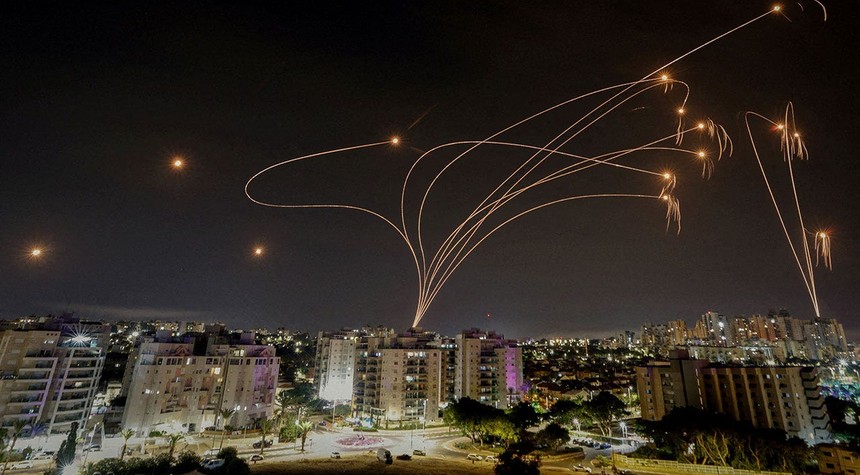
As Israeli Prime Minister Benjamin Netanyahu arrives in Washington for discussions with President Donald Trump, a significant defense policy recommendation has emerged that could reshape American homeland security infrastructure.
The Jewish Institute for National Security of America has released a comprehensive analysis arguing that the United States should incorporate proven Israeli air defense technology into Golden Dome, the ambitious layered missile shield designed to protect American territory from an expanding array of aerial threats. The timing of this recommendation, coinciding with high-level diplomatic meetings expected to address Iranian aggression and broader regional security concerns, underscores the strategic importance of the U.S.-Israel defense relationship.
The report, entitled “The Missing Shield: Acquiring Israeli Air Defenses Makes Golden Dome Sustainable,” identifies what analysts characterize as a critical vulnerability in current planning for American homeland defense. While substantial resources are being directed toward strategic and space-based capabilities, the analysis warns that these systems may require years of development before becoming operational. Meanwhile, more immediate and frequent threats from drones, cruise missiles, and shorter-range projectiles could exploit gaps in American defenses.
The concern centers on a fundamental imbalance in threat assessment and resource allocation. Advanced space-based detection and interception systems represent the future of strategic defense, but their extended development timelines may leave American cities, military installations, and critical infrastructure exposed to the very threats that adversaries are deploying with increasing frequency today.
Israeli air defense systems, by contrast, have been tested extensively under combat conditions. The Iron Dome system, in particular, has demonstrated remarkable effectiveness in intercepting short-range rockets and artillery shells. This proven capability, developed through years of operational necessity, offers the United States an opportunity to address current vulnerabilities while longer-term strategic systems reach maturity.
The recommendation reflects a broader strategic question facing American defense planners: how to balance investment in next-generation capabilities against immediate operational needs. The Golden Dome initiative envisions a comprehensive shield capable of detecting, tracking, and intercepting ballistic missiles, cruise missiles, hypersonic weapons, and unmanned aerial systems. Achieving this ambitious goal requires integrating multiple layers of defense, each optimized for different threat profiles and engagement altitudes.
What makes the Israeli technology particularly attractive is its cost-effectiveness relative to alternatives. Defense budgets, while substantial, remain finite. Systems that can provide immediate protection at lower cost allow resources to be distributed more efficiently across the full spectrum of threats.
The analysis arrives as the United States confronts an evolving threat environment. Drone technology has proliferated globally, placing sophisticated aerial capabilities within reach of both state and non-state actors. Cruise missiles, once the exclusive domain of major powers, have become increasingly common. These developments demand defensive capabilities that can respond to high-volume, lower-altitude threats with the same seriousness traditionally reserved for strategic ballistic missiles.
The recommendation also carries implications for the U.S.-Israel strategic partnership. Defense cooperation between the two nations has historically focused on American support for Israeli security needs. Integrating Israeli technology into American homeland defense would represent a maturation of this relationship, acknowledging that innovation and operational experience flow in multiple directions.
As Netanyahu and Trump discuss regional security challenges, the question of how best to protect American territory from emerging threats deserves serious consideration. The answer may well involve learning from allies who have confronted these dangers directly.
Related: Turkish Telecommunications Ties to China Complicate F-35 Aircraft Deal