
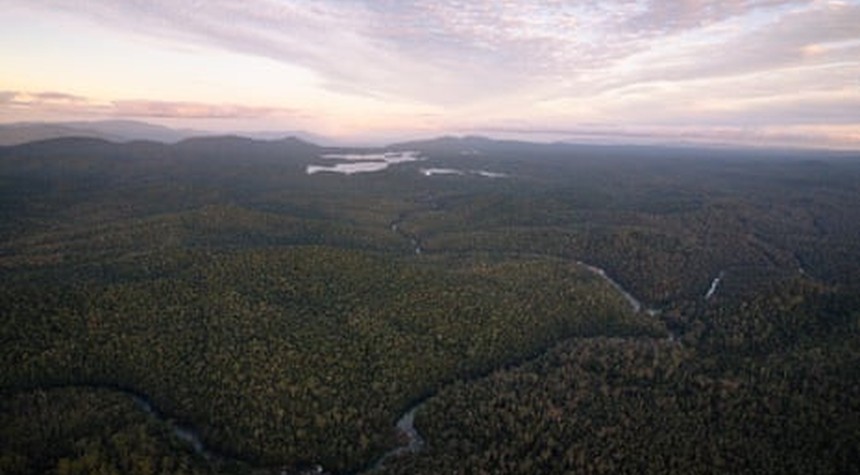
A conservation organization in Australia is racing to complete what would be the most significant private land acquisition for wildlife protection in the nation’s history, with a Christmas deadline to secure more than 20,000 hectares of pristine habitat that serves as home to at least twelve endangered species.
Bush Heritage Australia has raised approximately $19 million toward the $24.7 million needed to purchase Wooroora station, a cattle property spanning more than 50,000 acres in far north Queensland. The organization requires an additional $5.3 million by December 24 to complete the transaction.
The property represents far more than simple real estate. Wooroora connects wet tropical rainforest with savanna woodland approximately 100 kilometers southwest of Cairns, creating a critical wildlife corridor in one of the most biodiverse regions on the planet. The land contains headwaters that flow directly to the Great Barrier Reef and borders Bush Heritage’s existing 43,575-hectare Yourka Reserve.
Among the notable species documented on the property are cassowaries and tree-kangaroos, with more than thirty species of conservation significance recorded to date. The station also serves as the northernmost refuge for koalas in this region. Scientists believe undiscovered species almost certainly exist within the property’s largely intact wet sclerophyll forest and savanna woodland.
The urgency of this acquisition becomes clearer when considering recent threats to the land. In 2024, the Australian government rejected a proposal to clear more than 500 hectares of Wooroora for a 42-turbine wind farm. The then-environment minister cited unacceptable environmental impact, particularly concerning the spectacled flying-fox and the northern greater glider.
Rachel Lowry, chief executive of Bush Heritage, characterized the acquisition as breaking through barriers not merely for her organization but for the conservation sector broadly. The fundraising campaign has spanned eighteen months and attracted significant international support.
During the 2025 United Nations climate summit, Lowry traveled to New York to present the project, resulting in a contribution of nearly $2.5 million from the foundation associated with Patagonia, the American outdoor clothing company. An anonymous Australian philanthropist contributed $6 million.
Lowry emphasized that protecting Wooroora delivers benefits extending well beyond Australian borders. Given the region’s status as a global biodiversity hotspot, permanent protection of this land constitutes a worldwide legacy, she noted.
The acquisition carries particular significance for the Jirrbal people, the traditional owners of this land. Kurt Noble, a senior Jirrbal elder, explained that the purchase would restore access to country with deep familial and cultural connections. His great-grandmother was born on Wooroora station, yet he had never previously had the opportunity to visit the property.
Noble described numerous stories within his family connected to this country, including Dreamtime narratives and more recent history. Much of traditional Jirrbal land remains under private ownership, making access difficult for traditional owners seeking to maintain connections with their ancestral country.
This conservation approach, combining private fundraising with indigenous partnership, represents an increasingly important model for environmental protection in an era when government resources prove insufficient for the scale of the challenge. The deadline approaches rapidly, and the world watches to see whether private citizens will step forward to preserve this irreplaceable natural heritage before it potentially faces development pressure once again.
The outcome will serve as a test case for whether private conservation initiatives can mobilize sufficient resources to protect critical habitats in an age of accelerating biodiversity loss.
Related: Neither Netanyahu Nor Opposition Secures Victory in Deadlocked Israeli Election