
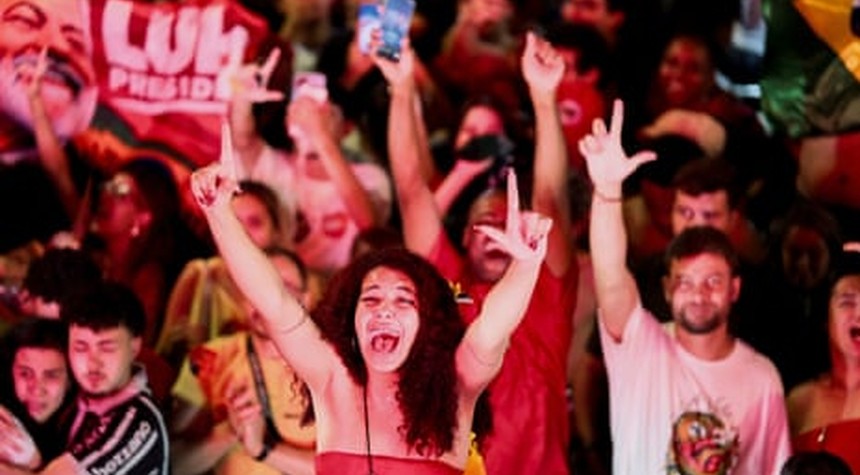
Brazil has completed a remarkable electoral cycle with the victory of Luiz Inácio Lula da Silva in the nation’s presidential race, though the path forward remains uncertain as his opponent refuses to accept the outcome.
The 80-year-old leftist secured 51.79 percent of the vote against 48.21 percent for his opponent, Flávio Bolsonaro, the far-right senator who carried forward the populist movement established by his father, former president Jair Bolsonaro. The margin represents approximately 4.3 million votes among Brazil’s 159 million registered voters.
This marks Lula’s fourth nonconsecutive term leading South America’s largest democracy, a feat achieved through what analysts describe as a historic comeback following a disappointing first-round performance earlier this month. The Workers’ Party incumbent demonstrated the kind of political resilience that has defined his decades-long career in Brazilian politics.
The elder Bolsonaro, currently serving a 27-year prison sentence for plotting a coup after losing the 2022 election, built a radical populist coalition that his son attempted to maintain. That movement suffered a significant setback with this result, which Lula himself characterized as “a defeat for denialism.”
The implications extend well beyond Brazil’s borders. This election carries substantial weight for environmental policy, particularly regarding the Amazon rainforest, for regional stability in Latin America, and for the broader global conversation about democratic governance versus authoritarian populism.
However, the victory arrives with considerable tension. Flávio Bolsonaro has refused to concede, pointing to a decision to extend voting hours by two hours, despite the fact that both campaigns had requested the extension for their own tactical reasons. This stance echoes the troubling pattern established by his imprisoned father and raises questions about the peaceful transfer of power.
The election represents more than a simple changing of the guard. It serves as a barometer for democratic resilience in a region that has experienced significant political turbulence in recent years. Lula’s return comes as he approaches his 81st birthday on Tuesday, making him one of the oldest leaders to assume power in the Western Hemisphere.
International observers will be watching closely to see how Brazil navigates the coming transition period. The relatively narrow margin of victory suggests a deeply divided electorate, and the refusal of the losing side to accept the results presents immediate challenges for national unity.
For the United States and its allies, Brazil’s democratic stability matters enormously. As the world’s ninth-largest economy and a key player in climate policy, Brazil’s trajectory will influence everything from trade relationships to environmental agreements to regional security arrangements.
The consolidation of democratic norms that Lula referenced in his victory speech will be tested in the days and weeks ahead. Whether Brazil can move forward without the kind of political violence that has marked other contested elections in the region remains an open question.
What is clear is that Brazilian voters, however narrowly, have chosen a return to leftist governance and a rejection of the Bolsonaro brand of politics. The world now watches to see whether that choice will be respected by those who lost.
Related: Israeli Forces Conduct Extensive West Bank Operations Following Deadly Hebron Attack