
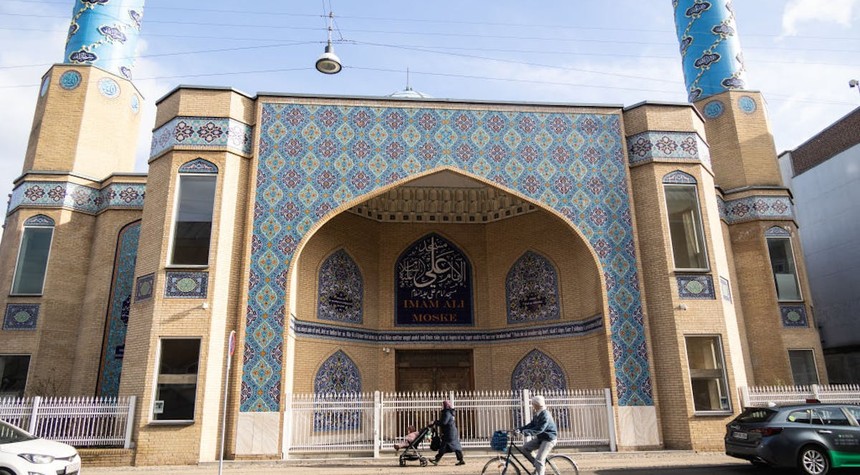
Denmark has initiated formal steps toward prohibiting the public broadcast of the Islamic call to prayer, marking the latest development in the nation’s increasingly restrictive approach to immigration and cultural integration.
Immigration Minister Morten Bødskov announced this week that the government would relaunch an inquiry into whether a nationwide ban on the Adhan could be implemented without violating Denmark’s constitutional protections for religious freedom. The Adhan, traditionally broadcast five times daily from mosque loudspeakers, serves as the Islamic summons to prayer.
Minister Bødskov, representing the Social Democratic party, articulated the government’s position in unusually direct language. He expressed concern that certain areas of Denmark faced the prospect of losing their cultural character to what he described as gradual Islamization. The minister stated that Denmark should maintain its distinctive Danish identity rather than resembling neighborhoods in Pakistani cities.
The practical reality on the ground already reflects significant restrictions. Several Danish municipalities, including the capital city of Copenhagen, have effectively silenced outdoor calls to prayer through stringent noise ordinances. The proposed national inquiry would examine whether a uniform prohibition could be drafted to withstand constitutional scrutiny while respecting existing religious freedom guarantees.
Denmark’s constitution protects the right to public worship but simultaneously permits restrictions on anti-democratic religious expression. The government’s challenge lies in crafting legislation that threads this constitutional needle.
This initiative represents continuity rather than departure in Danish policy under Prime Minister Mette Frederiksen’s leadership. Denmark has established some of Europe’s most stringent immigration regulations, including controversial legislation empowering authorities to relocate migrants from neighborhoods deemed to have excessive concentrations of foreign-born residents.
The demographic context provides important perspective. Denmark’s population of approximately six million includes roughly 270,000 Muslims served by around one hundred mosques throughout the country.
The Danish deliberations occur within a broader international context. In Australia, a local government in the Sydney metropolitan area is considering planning regulations that would prohibit mosques from installing outdoor loudspeakers for the call to prayer. This preemptive measure responds to a pending application from a mosque in the Lakemba district.
The contrast with certain American jurisdictions proves instructive. New York City has moved in the opposite direction, accommodating public calls to prayer in neighborhoods with significant Muslim populations.
These divergent approaches reflect fundamentally different philosophies regarding cultural integration and religious accommodation in Western democracies. Denmark’s position emphasizes cultural preservation and assimilation expectations for immigrant communities. The Danish model prioritizes maintaining what government officials characterize as national cultural coherence over expansive interpretations of religious expression in public spaces.
Whether Denmark’s constitutional framework will permit such a prohibition remains an open question. The forthcoming inquiry will need to balance religious freedom protections against the government’s stated interest in preserving Danish cultural identity. The outcome will likely influence similar debates across Europe, where questions of immigration, integration, and national identity continue to dominate political discourse.
For now, Denmark has signaled its clear intent. The question is no longer whether the government wishes to silence the call to prayer, but whether it can find a legally defensible means to do so.
Related: Federal Police Arrest Spanish Citizen at São Paulo Airport for Alleged Racial Abuse