
Two troubling developments from the Middle East and Central Asia underscore the continuing struggle for women’s rights under authoritarian regimes, with millions of young women bearing the cost of political oppression.
In Australia, the captain of Iran’s women’s soccer team has withdrawn her asylum application, citing fears for her family’s safety back home. The decision represents a stark illustration of how the Iranian regime extends its reach beyond its borders to silence dissent and maintain control over its citizens.
Sadaf Zarei, an international student at the University of Connecticut, has brought attention to this case while documenting the broader persecution of Iranian women. Zarei describes systematic digital blackouts and widespread human rights violations perpetrated by what she characterizes as a criminal terrorist entity masquerading as a legitimate government. The soccer captain’s retreat from seeking protection abroad demonstrates the regime’s effectiveness in using family members as leverage against those who dare to seek freedom.
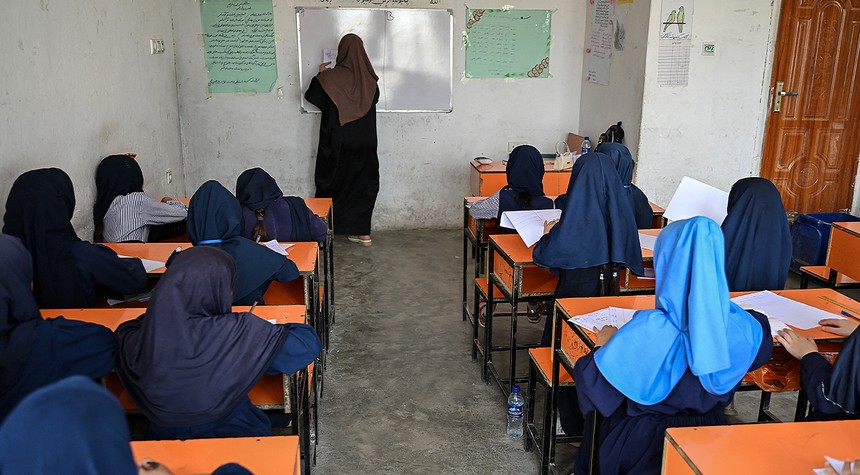
Meanwhile, five years after the Taliban’s return to power in Afghanistan, the consequences for women and girls have grown increasingly severe. According to the United Nations Educational, Scientific and Cultural Organization, 2.4 million Afghan girls remain barred from secondary education, making Afghanistan the only nation on Earth that formally prohibits females from receiving education beyond the primary level.
This represents a complete reversal of two decades of progress. What was once a country where girls could aspire to higher education and professional careers has become a place where an entire generation of young women faces a future without access to the classroom.
UNESCO issued a renewed appeal on Tuesday demanding the immediate and unconditional restoration of educational rights for Afghan girls and women. The agency’s statement emphasized that the Taliban’s restrictions extend well beyond the schoolhouse door. Women now find themselves excluded from most paid employment and public-facing professions. Even basic mobility has been curtailed, with women required to have male guardians for travel.
The parallel situations in Iran and Afghanistan reveal a disturbing pattern. In both nations, authoritarian regimes have identified women’s freedom as a threat to their control. Whether through the barrel of a gun in Kabul or the threat of retribution against family members in Tehran, these governments understand that subjugating half the population serves their interests in maintaining absolute power.
The international community’s response to these crises will determine whether such oppression continues unchecked. The withdrawal of American forces from Afghanistan created the vacuum that allowed the Taliban to reimpose medieval restrictions on women. Reports indicate Moscow has now forged military cooperation with the Taliban, providing the regime with international legitimacy it does not deserve.
For the 2.4 million Afghan girls denied education and the Iranian women who cannot speak freely without endangering their families, the question remains whether the free world possesses the will to support their struggle for basic human dignity. These are not merely regional concerns but tests of whether fundamental human rights retain meaning in the face of determined tyranny.
The courage displayed by women like the Iranian soccer captain, who sought freedom only to be forced back into silence, and by advocates like Sadaf Zarei, who continues to speak despite the risks, deserves more than sympathy. It demands action from those nations that claim to champion liberty and human rights.
Related: Trump Demands Iran Pay Compensation for Decades of American Combat Deaths