
The death of an 18-year-old British university student has sparked an unprecedented diplomatic exchange between Washington and London, raising fundamental questions about policing priorities in Western democracies.
Henry Nowak, a freshman student, died in December after being stabbed multiple times with an eight-inch ceremonial knife while in police custody. The circumstances surrounding his death have proven deeply troubling. Police had placed Nowak in handcuffs following an accusation of racial abuse, an allegation authorities now acknowledge was fabricated by his attacker, Vikram Digwa.
According to reports from Hampshire and Isle of Wight Constabulary, officers ignored Nowak’s repeated cries for help as he bled from his wounds. The young man, described by those who knew him as having exceptional promise, died from his injuries while restrained and in the care of law enforcement.
The incident remained largely confined to British media until Thursday evening, when the State Department issued a statement that has reverberated across the Atlantic. The unusually pointed rebuke addressed what American officials characterized as systemic failures in British policing.
“Ideological conditioning and two-tiered policing are glaring symptoms of civilizational decline,” the State Department declared in its statement. “They must be rejected across the West. The United States sends our condolences to the family of Henry Nowak and the people of the United Kingdom at this troubling time.”
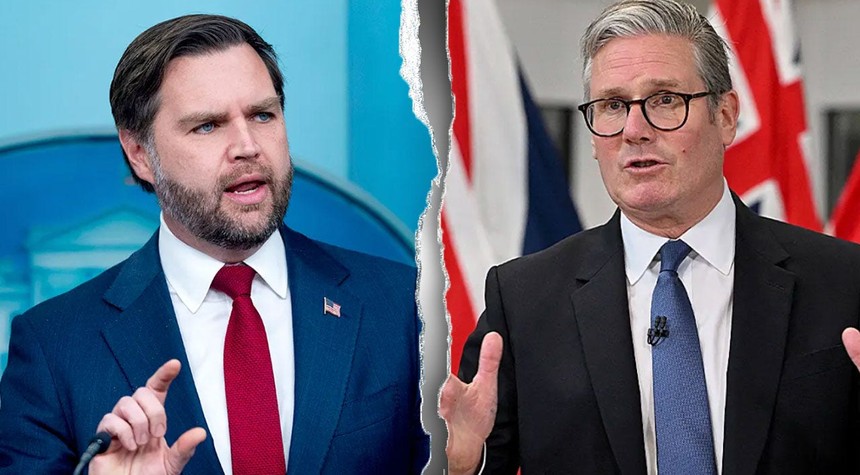
Vice President JD Vance amplified the administration’s concerns, asserting that the tragedy exemplifies broader threats facing Western civilization. His comments suggest the administration views this incident not as an isolated failure but as indicative of deeper problems within allied nations.
The case raises serious questions about policing priorities when officers appear more concerned with allegations of offensive speech than with immediate threats to life. That police would handcuff an injured stabbing victim based on an unverified accusation, while his attacker remained free to continue the assault, defies basic principles of law enforcement.
The fabricated nature of the racial abuse allegation adds another layer of concern. It suggests a system where certain accusations receive immediate credence and action, while traditional police responsibilities, such as protecting citizens from violent crime, become secondary considerations.
This marks the first time the Trump administration has commented publicly on the stabbing. The decision to address a domestic British law enforcement matter through official State Department channels represents a significant diplomatic step, one typically reserved for matters of substantial international concern.
The incident has generated considerable attention on social media platforms, where critics have pointed to it as evidence of misplaced priorities within Western law enforcement agencies. The concept of “two-tiered policing,” referenced in the State Department statement, refers to allegations that police apply different standards of enforcement based on the identity or ideology of those involved.
For the Nowak family, the diplomatic controversy offers cold comfort. They have lost a son whose future held promise, cut down in circumstances that suggest multiple failures by those sworn to protect the public.
As this matter continues to develop, it seems certain to fuel ongoing debates about the proper role of law enforcement in free societies and the balance between protecting citizens from violence and policing speech and thought.
Related: Argentina Confronts Rising Violence Against Women After Teen Murders