
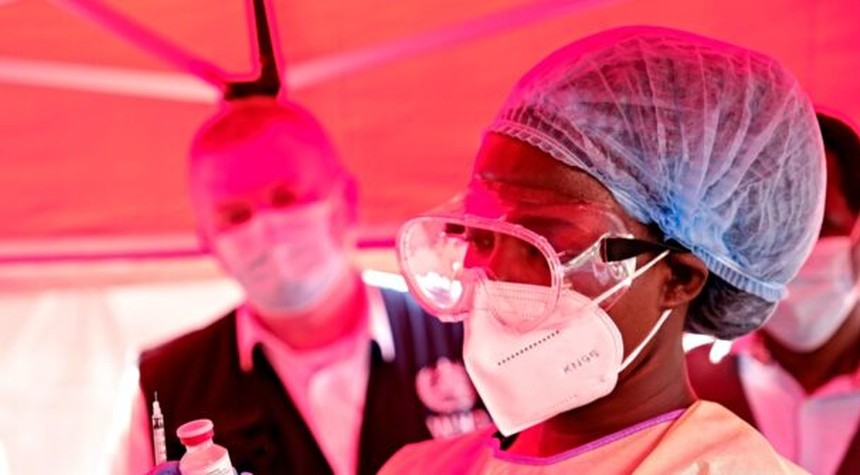
The international community faces a mounting crisis in central Africa as a particularly virulent strain of the Ebola virus continues its deadly march through the Democratic Republic of Congo and beyond, with health officials now acknowledging that reported cases likely represent only a fraction of the true scope of this outbreak.
The Coalition for Epidemic Preparedness Innovations, an international organization that funds vaccine development, announced Friday its commitment to developing a vaccine for the Bundibugyo strain of Ebola within 100 days. No vaccine currently exists for this particular variant of the hemorrhagic fever that has claimed hundreds of lives in recent weeks.
Jane Halton, who chairs the coalition’s board, addressed journalists in Geneva, Switzerland, making clear the gravity of the situation facing health workers in the region. The official count stands at 670 suspected cases and 160 suspected deaths, with 61 cases confirmed through laboratory testing, according to data released Thursday by the Democratic Republic of Congo’s health ministry. However, Halton emphasized that these figures significantly underestimate the outbreak’s true impact.
“The truth of the matter is that real numbers are much bigger than that,” Halton stated, noting that the coalition has made substantial progress in epidemic response capabilities compared to five years ago. Whether the ambitious 100-day timeline can be met remains uncertain, though Halton expressed confidence that any response will be markedly faster than previous efforts.
The outbreak has already crossed international borders, with two confirmed cases appearing in neighboring Uganda. More troubling still, the disease has begun spreading into rebel-controlled territories within the Democratic Republic of Congo, complicating containment efforts and limiting health workers’ ability to track cases and provide treatment.
The World Health Organization elevated the outbreak to a public health emergency of international concern over the weekend, a designation reserved for the most serious global health threats. This classification triggers additional resources and international cooperation, but also underscores the potential for this outbreak to spread well beyond its current geographic boundaries.
The Bundibugyo strain presents unique challenges for medical researchers. While vaccines exist for other Ebola variants, this particular strain requires its own targeted vaccine development. The 100-day timeline represents an ambitious acceleration of a process that typically requires years of research, testing, and regulatory approval.
The situation in central Africa serves as a reminder that infectious disease remains a persistent threat to global stability and human life. The Democratic Republic of Congo’s limited healthcare infrastructure, combined with ongoing political instability and armed conflict in rebel-held regions, creates ideal conditions for disease transmission while simultaneously hampering containment efforts.
As health officials work to develop medical countermeasures, the immediate focus remains on preventing further spread through traditional public health measures and treating those already infected. The coming weeks will prove critical in determining whether this outbreak can be contained or whether it will require the extensive international response that previous Ebola epidemics have demanded.
Related: US Influence Threatens to Reverse Colombia’s Climate Progress Under New Leadership