
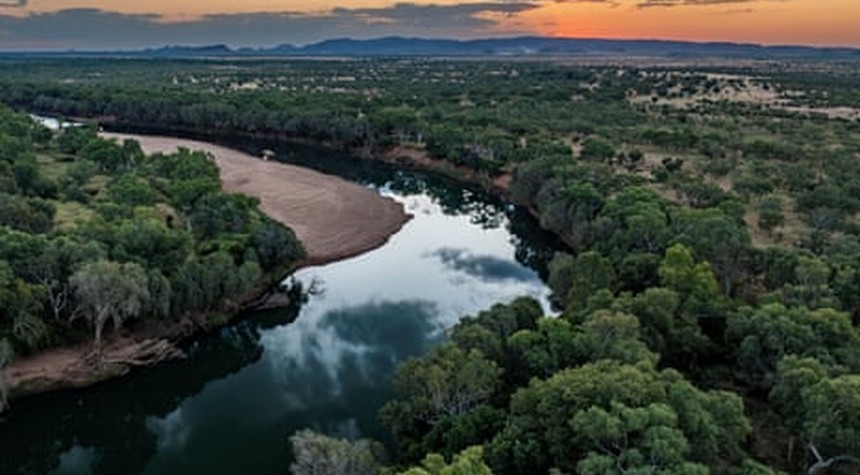
The federal government of Australia has raised substantial concerns about an American energy company’s proposal to conduct hydraulic fracturing operations in one of the world’s most ecologically significant regions.
Black Mountain Energy, a Texas-based corporation operating through its subsidiary Bennett Resources, has applied for federal approval to drill twenty natural gas wells in Western Australia’s Kimberley region. This area comprises part of the planet’s largest intact tropical savanna, a designation that underscores both its ecological value and the weight of responsibility in any development decision.
The proposed Valhalla project site sits west of Fitzroy Crossing, adjacent to a creek system that feeds into the Fitzroy River, which carries national heritage listing status. The implications extend beyond immediate drilling operations to potentially opening the entire Fitzroy valley landscape to hydraulic fracturing activities.
Documents obtained through freedom of information requests reveal a pattern of inadequate environmental assessment work by the company, according to federal environment department officials. While Western Australia’s Environmental Protection Authority has recommended approval under state regulations, federal reviewers have repeatedly found the company’s submissions insufficient.
The correspondence between federal officials and Black Mountain Energy throughout the previous year demonstrates persistent deficiencies in the company’s environmental impact studies. Specifically, officials noted the company failed to adequately identify and characterize both surface water and groundwater resources in the region. This fundamental gap prevented proper assessment of potential harm to ecosystems dependent on these water sources.
The environmental stakes are considerable. The region provides habitat for the critically endangered northern blue-tongued skink and the endangered largetooth sawfish, which maintains important nursery grounds in the Fitzroy River system. Without comprehensive data on water resources and ecosystem dependencies, federal officials stated they cannot properly evaluate threats to these vulnerable species.
Federal reviewers also directed the company to engage additional traditional owner groups who maintain cultural and spiritual connections to the Fitzroy River. Officials specifically noted the need to assess impacts on Rainbow Serpent Tradition Values, despite the company’s assertions that its operations would not affect the river system.
The department’s position remains clear: Black Mountain Energy has provided insufficient evidence to support its claims of minimal environmental impact.
Environs Kimberley, a conservation organization that secured the government documents, has formally requested that Environment Minister Murray Watt exercise his authority under national environmental legislation to terminate the project assessment. The organization’s executive director, Martin Pritchard, argues the company has had adequate time to complete the required studies but appears unwilling to undertake the necessary work.
The case presents familiar tensions between resource development and environmental protection, though the stakes here involve internationally significant ecosystems and indigenous cultural heritage. The federal government’s repeated requests for additional information suggest a deliberate, methodical approach to evaluation rather than hasty approval.
As this matter proceeds, it will test whether existing environmental safeguards prove adequate to protect irreplaceable natural resources against incomplete or insufficient impact assessments. The outcome will likely influence future development proposals in similarly sensitive regions across Australia.
Related: Powerful Earthquake Strikes Southern Philippines, Tsunami Warning Issued