
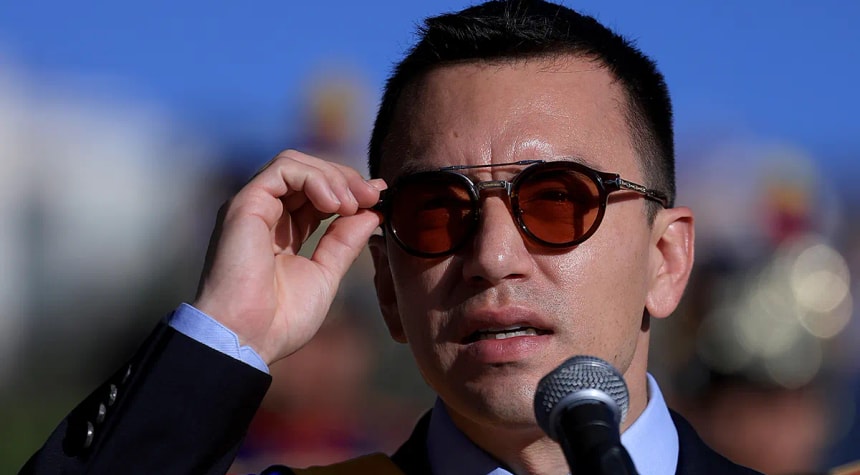
The government of Ecuador finds itself navigating a delicate balance between constitutional restrictions and practical security cooperation with the United States. President Daniel Noboa has firmly denied that American forces operate a military base on Ecuadorian soil, even as evidence mounts of an expanded United States military presence at Taura Air Base near the coastal city of Guayaquil.
In remarks to the news outlet Altavoz, President Noboa characterized the American military personnel at Taura as conducting temporary activities under the terms of a bilateral security agreement between the two nations. These operations include intelligence gathering missions utilizing unmanned drone aircraft. The Ecuadorian president emphasized the collaborative nature of the arrangement, stating unequivocally that Taura remains an Ecuadorian installation where American and Ecuadorian forces work together.
The clarification came in response to an investigation by Agence France-Presse that documented significant American military activity at the air base. The investigation identified approximately twenty United States military flights arriving at Taura between June and mid-October of last year, along with the establishment of dozens of temporary tent structures and the construction of new infrastructure. Flight records indicate these aircraft originated from American military installations including Marine Corps Air Station Cherry Point in North Carolina and Dover Air Force Base in Delaware, with intermediate stops in Puerto Rico and Panama.
The expanded American presence has raised questions within Ecuador’s own military establishment. According to internal documents, then-Air Force Commander General Mauricio Salazar sent correspondence in September requesting clarification regarding the legal status of the deployment. General Salazar was subsequently reassigned to a position of lesser authority.
These developments occur against the backdrop of a November 2025 referendum in which Ecuadorian voters rejected a proposal backed by President Noboa that would have amended the nation’s constitution to permit foreign military bases on Ecuadorian territory. The defeat of that measure underscores the sensitivity of foreign military presence in a country where constitutional provisions explicitly prohibit such installations.
Nevertheless, security cooperation between Quito and Washington has intensified considerably. Human Rights Watch has identified the United States as Ecuador’s principal security partner in confronting organized criminal networks, providing equipment, training, intelligence capabilities, and direct military assistance. The organization has expressed concern about what it terms serious human rights violations by both governments, criticizing their approach of treating confrontations with organized crime groups as warfare.
Since President Donald Trump returned to office in January 2025, his administration has designated multiple Latin American criminal cartels as foreign terrorist organizations and authorized military action against vessels suspected of drug trafficking in international waters. Ecuador has emerged as a significant partner in these efforts.
Roberto Kury, Ecuador’s foreign minister, discussed the cooperation in September on the sidelines of the United Nations General Assembly. He reported positive results from enhanced intelligence sharing and joint operations that have successfully intercepted narcotics shipments. Minister Kury emphasized that operations always include the presence of Ecuadorian military or police forces working alongside their American counterparts.
The minister noted the fundamental reality driving this cooperation. The majority of narcotics produced or transshipped through Ecuador are destined for the United States market, making drug trafficking a shared problem requiring coordinated action.
The situation in Ecuador reflects broader questions about sovereignty, security cooperation, and the methods employed to combat transnational organized crime. How nations balance these competing concerns while respecting constitutional limitations and human rights obligations remains an evolving challenge in an era of increasingly sophisticated criminal networks that transcend national borders.
Related: Miguel Angel Felix Gallardo Dies at 80 in Mexican Hospital