
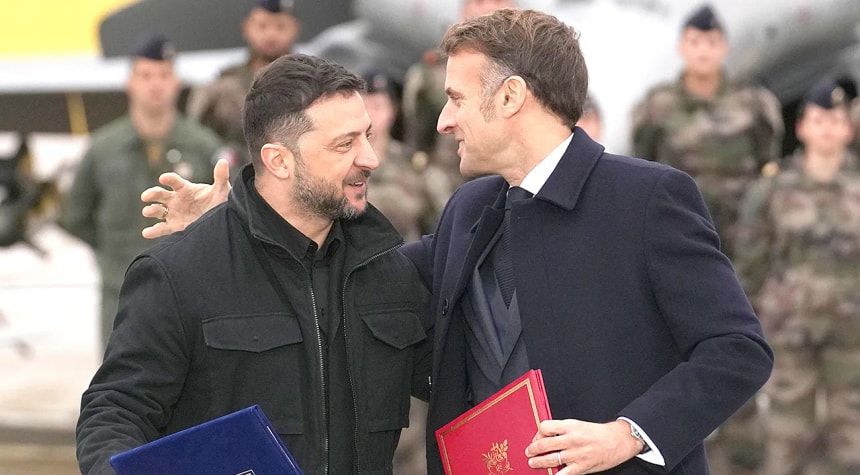
French military personnel have been operating inside Ukraine since at least last summer in a covert mission that raises new questions about the extent of Western involvement in the war against Russia. This is World Reports.
The mission, known by the codename "Volia," involves small teams of French troops deployed on short-term rotations under the command of a French general. These forces are training Ukrainian personnel and maintaining French-supplied military equipment, including CAESAR self-propelled howitzers, Mirage 2000 fighter jets, and precision-guided missiles. The French military has emphasized that its personnel are not engaged in combat operations.
The disclosure of this mission comes at a particularly significant moment. The United States and European allies are pursuing renewed negotiations to end the conflict, now in its twelfth year if one counts from Russia’s initial intervention in 2014. The timing has not gone unnoticed among military analysts who see this as a deliberate signal to Moscow.
General Philip Breedlove, former NATO Supreme Allied Commander Europe, observed that France’s actions carry weight precisely because they come from one of NATO’s most powerful members, both politically and militarily. The message to Russian President Vladimir Putin is clear: Western support for Ukraine remains firm despite the costs and despite Moscow’s repeated warnings against such involvement.
The operational structure appears designed for flexibility and minimal visibility. French personnel rotate between France, Poland, and Ukraine in what has been described as a light organizational framework. Some teams have reportedly worked alongside Ukrainian intelligence units on observation missions closer to the front lines, though the full scope of these activities remains unclear.
This deployment represents a notable expansion of President Emmanuel Macron’s support for Kyiv. France has already trained approximately twenty-five thousand Ukrainian soldiers in France and Poland since 2023. Macron had previously suggested the possibility of sending Western military instructors into Ukraine in 2024, a proposal that generated concern among some allies, including the United States and Germany, about potential escalation with Russia.
The French parliament was not formally informed of the deployment. Authorities maintain that parliamentary approval was unnecessary because the mission involves training rather than combat. This reasoning may satisfy legal requirements, but it underscores the sensitive nature of Western military presence in Ukraine.
The historical context here is important. Following Russia’s initial aggression in 2014, NATO countries established training facilities inside Ukraine, most notably at Yavoriv in the western part of the country. When Russia launched its full-scale invasion in February 2022, most nations withdrew their training personnel. General Breedlove has stated that he disagreed with that decision, and he now commends France for having what he termed the courage to maintain a presence and support Ukraine in what he characterized as an illegal and immoral war.
Russia has consistently opposed Western military involvement in Ukraine and has characterized such assistance as evidence that this is a proxy war between Russia and NATO. President Putin has made this argument repeatedly, though Western leaders counter that they are supporting a sovereign nation’s right to defend itself against aggression.
The reports emerged the same day Ukrainian President Volodymyr Zelenskyy announced fresh talks with American and European representatives. Zelenskyy said Ukrainian officials held online discussions with United States presidential envoys and European representatives about prospects for a negotiated settlement with Russia. He also warned that intelligence indicated Russia was preparing major strikes against Ukrainian targets.
General Breedlove suggested that France’s mission could encourage other NATO members to expand their support for Ukraine. Nations on NATO’s eastern flank, those that border Russia or are closest to the conflict, have been particularly vocal about supporting Ukraine but may have been waiting for leadership from a major power like France.
The question now is whether this represents a turning point in Western engagement or simply an acknowledgment of what has been occurring quietly for months. As negotiations proceed, the presence of French troops in Ukraine adds another complex element to an already difficult diplomatic equation. What remains constant is the fundamental reality that after nearly three years of full-scale war, and twelve years since the conflict began, the path to peace remains uncertain and the costs continue to mount.
Related: Whistleblower Claims Military Ignored Warnings Before Attack That Killed Six Soldiers