
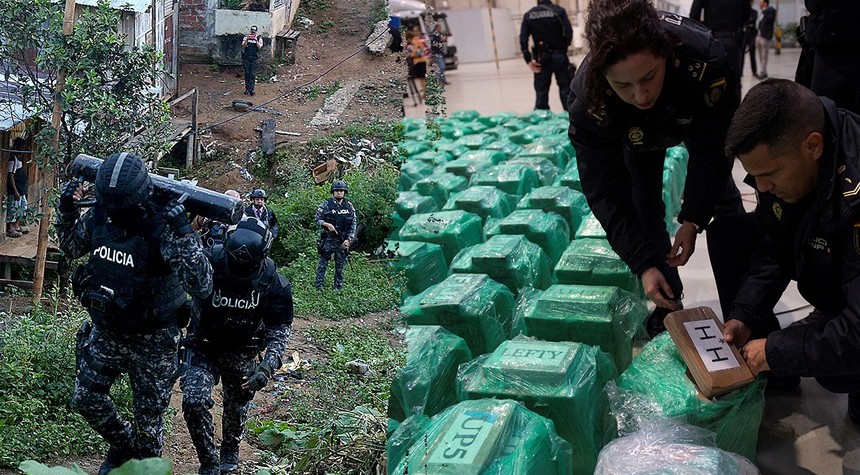
Ecuador has positioned itself as a vital partner in the United States’ intensified campaign against drug cartels and narcoterrorism, with military and intelligence forces from both nations now operating in close coordination to intercept narcotics and dismantle criminal organizations.
Foreign Minister Roberto Kury, speaking during the United Nations General Assembly this week, described the deepening relationship between Washington and Quito as producing significant achievements in recent months. The cooperation has yielded substantial drug seizures through shared intelligence and coordinated operations on Ecuadorian soil.
“There is intelligence and cooperation from the United States, but there is also always the presence of Ecuadorian military or police. They work together,” Kury explained, emphasizing the joint nature of the operations. He noted the fundamental logic driving American involvement: “Most of the drugs go to the United States. So that’s why the United States shares the problem.”
The scope of that problem is considerable. According to testimony from an FBI official before Congress earlier this year, approximately seventy percent of the world’s cocaine passes through Ecuadorian ports. Criminal organizations are waging violent battles for control of trafficking routes that carry cocaine produced in Colombia and Peru to markets across the globe.
This week provided dramatic evidence of the partnership’s effectiveness. On Wednesday, American and Ecuadorian forces eliminated a high-value target known as “Alias Charlie,” described by Ecuadorian Defense Minister Gian Carlo Loffredo as one of the country’s most dangerous criminals. The individual belonged to the Los Choneros group and maintained connections with Colombia’s Oliver Sinisterra Front and Mexico’s Jalisco New Generation Cartel. His primary objective, according to officials, was spreading terror throughout Ecuador.
Defense Secretary Pete Hegseth highlighted the operation as an example of the Americas Counter Cartel Coalition in action, demonstrating how the Trump administration is deploying American military resources against threats within the Western Hemisphere.
For Ecuador, the stakes extend beyond cooperation with Washington. The small South American nation has undergone a troubling transformation in recent years. Once regarded as among Latin America’s safer countries, Ecuador now finds itself on the front lines of the regional cartel conflict. The resulting violence has reached such levels that President Daniel Noboa declared an “internal armed conflict” against criminal groups and authorized military deployment against them.
The arrangement represents a significant element of the current administration’s foreign policy approach. Rather than dispersing American attention and resources across distant global theaters, Washington is refocusing on challenges within the Western Hemisphere. Ecuador has become a proving ground for this strategic shift, demonstrating whether coordinated action between the United States and regional partners can effectively combat the transnational criminal networks that have destabilized multiple countries.
The cooperation encompasses both intelligence sharing and operational presence, with American forces providing critical information while working alongside Ecuadorian military and police personnel during enforcement actions. This model allows the United States to apply its considerable intelligence capabilities while ensuring that operations maintain Ecuadorian sovereignty and local knowledge.
As the partnership continues to develop, both nations appear committed to sustaining pressure on the criminal organizations that have brought violence and instability to Ecuador while threatening American communities with their drug shipments. The question now is whether this cooperation can be maintained and expanded to other nations facing similar challenges from organized crime.
Related: Chinese President Xi Jinping Arrives in Washington for High-Stakes Summit with Trump