
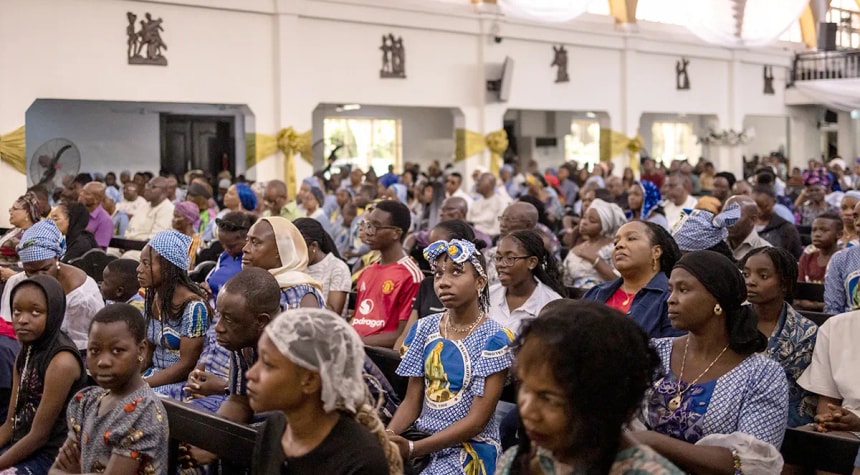
The violence against Nigerian Christians continues unabated in the country’s Middle Belt region, yet advocates fear that recent shifts in American political attention following the midterm elections may jeopardize efforts to address this humanitarian crisis.
Stephen Osemwegie, president and founder of Save Nigeria Group USA, reports that conditions have deteriorated significantly. His nonprofit organization monitors the welfare of Nigerians both in America and abroad, and his assessment is sobering. Millions remain displaced from their homes. Churches continue to face vandalism and destruction. Parishioners are being killed. Yet these tragedies receive scant attention in American media as other international crises and domestic political concerns dominate the headlines.
The roots of this conflict extend back decades, though the current violent phase involving Islamist insurgencies began around 2009. Since that time, the United Nations and the Armed Conflict and Location Data Project have documented more than 53,000 deaths across Nigerian communities. Advocacy organizations including Intersociety and Open Doors place the Christian death toll between 50,000 and 62,000 over this same period.
The crisis has attracted attention from unexpected quarters. Rapper Nicki Minaj and actress Patricia Heaton have both used their public platforms to highlight the persecution. In October, Minaj spoke at a Tesla facility event about her personal connection to Nigeria and called upon celebrities, influencers, and Christians to raise awareness. The following month, she appeared alongside United States Ambassador to the United Nations Mike Waltz at an event focused on combating religious violence in Nigeria.
During her remarks, Minaj expressed gratitude for American religious freedom while drawing attention to the persecution abroad. She noted that Nigerian Christians face targeted violence, forced displacement, and death simply because of their faith. Churches burn, families scatter, and entire communities live under constant threat.
Heaton has similarly shared reports of massacres, beheadings, and mass burials through social media, while criticizing what she perceives as inadequate media coverage. In May, she highlighted data showing that more than seventy percent of Christians killed for their faith worldwide last year were Nigerian.
The violence stems from multiple sources. Radical Islamist groups including Boko Haram and Islamic State West Africa Province have intensified their campaigns since 2010. Fulani ethnic militias have also conducted attacks. These assaults have increasingly targeted farming and Christian communities in the Middle Belt, though the broader national conflict has affected communities across religious lines, including Muslim populations.
According to Aid to the Church in Need, more than three and a half million people have been displaced within Nigeria. Open Doors International reports that thousands of Christians now live in displacement camps throughout the country.
Recent political developments in Washington have raised concerns among advocates. A report by Truth Nigeria examined whether Nigerian Christian leaders are reconsidering their strategy following the midterm elections. The concern centers on whether Republican lawmakers who supported stronger accountability measures and Nigeria’s designation as a Country of Particular Concern now lack the political influence they once possessed.
Osemwegie acknowledges that the Trump administration brought significant attention to the situation. The Country of Particular Concern designation proved meaningful, as did cooperation between the two nations on drone surveillance and intelligence sharing. However, he worries about potential changes in congressional pressure and religious freedom advocacy going forward.
American experience in combating global terrorism could prove invaluable to Nigeria, Osemwegie suggests. He hopes American assistance will continue despite the shifting political landscape. The gains made recently must be sustained, he argues, to prevent a relapse into worse conditions.
The House Foreign Affairs Committee’s Africa Subcommittee convened a hearing Thursday to assess Nigeria’s efforts to protect Christians and secure the Middle Belt region. Representative Chris Smith of New Jersey chaired the proceedings, which represented a follow-up to previous hearings on religious persecution in Nigeria held late last year.
That such a hearing took place demonstrates continued congressional interest in the matter. Whether this interest can translate into sustained policy attention and effective intervention remains the critical question facing those who advocate for Nigeria’s persecuted Christian communities.
Related: American Drones Aid Venezuela in Attack on Colombian Guerrilla Group