
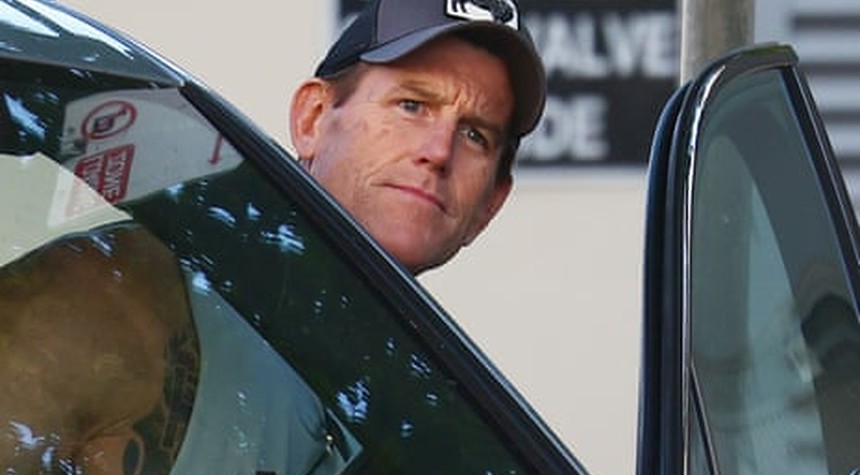
Australian authorities have requested an investigation into apparent media leaks surrounding the arrest of Ben Roberts-Smith, the nation’s most decorated living soldier, who now faces five charges of war crime murder stemming from his service in Afghanistan.
The Office of the Special Investigator and the Australian Federal Police have formally referred the matter to the National Anti-Corruption Commission, seeking answers about how journalists obtained advance knowledge of the April 7th arrest at Sydney Airport. As of this week, no response has been received.
Chris Moraitis, director-general of the Office of the Special Investigator, expressed his concern during Senate estimates testimony Tuesday evening. When questioned about how media representatives learned of the pending arrest beforehand, Moraitis offered a simple assessment: “Good question.”
The situation raises troubling questions about operational security within Australia’s federal law enforcement apparatus. Moraitis indicated that his office maintains strict protocols regarding sensitive operations, making the breach particularly noteworthy. “It surprised me that that would happen, because we’ve usually been pretty good on keeping a low profile,” he stated.
The evidence of the leak was unmistakable. Media personnel were observed at various locations on the morning of the arrest, prompting immediate concern from investigators. “The media seem to have been privy to things, and therefore we’re taking steps to ascertain what happened there,” Moraitis explained under questioning from Liberal Senator Dave Sharma.
Roberts-Smith, a Victoria Cross recipient and former SAS corporal, faces allegations that he murdered unarmed civilians during Australia’s two-decade mission in Afghanistan. The charges relate to three separate incidents during his deployments with the elite special forces unit. The 47-year-old has categorically denied all allegations against him.
The circumstances of the arrest itself have generated political controversy. Federal police distributed video footage showing Roberts-Smith being escorted from an aircraft on the tarmac by officers. The public nature of the arrest, combined with apparent media foreknowledge, has prompted questions about whether proper protocols were followed.
Moraitis confirmed that his office had notified Attorney-General Michelle Rowland’s office that the arrest would occur on April 7th. However, he emphasized that no operational details, including the specific location where authorities would take Roberts-Smith into custody, were shared with the attorney-general’s office in advance.
The case represents one of the most significant war crimes prosecutions in Australian history, involving a soldier who received his nation’s highest military honor for valor. The charges stem from Australia’s involvement in Afghanistan, a mission that ultimately ended without achieving its strategic objectives.
The leak investigation now adds another layer of complexity to an already sensitive case. If unauthorized disclosures did occur, they could potentially compromise not only this prosecution but future operations conducted by the Office of the Special Investigator.
The matter now rests with the National Anti-Corruption Commission, which must determine whether the apparent breach warrants a full investigation and, if so, identify the source of the unauthorized information provided to media organizations.
Related: Trump Orders Strikes on Iranian Military Sites as Nuclear Negotiations Stall