
The attempted hijacking of a FlyDubai aircraft bound for Israel has exposed what one veteran security expert describes as a dangerous complacency in Western counterterrorism efforts, more than two decades after the September 11th attacks reshaped global aviation security.
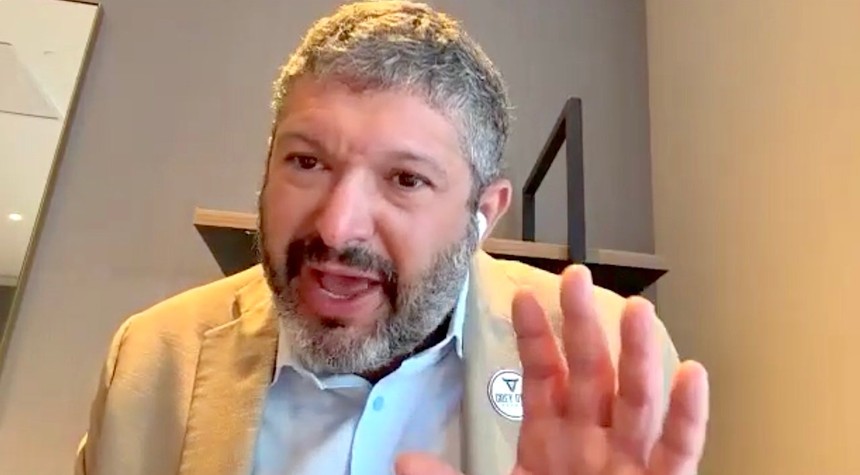
Bryan Stern, chairman and chief executive of Grey Bull Rescue and a first responder at Ground Zero, warns that the United States and its allies are operating with outdated assumptions against adversaries who have grown increasingly sophisticated. The nonprofit organization he leads conducts evacuations from war zones and hostage situations worldwide, giving Stern direct insight into the capabilities and strategies of terrorist networks.
“They’re good at chess, and we’re, if we’re lucky, playing checkers,” Stern said, characterizing the current state of Western counterterrorism efforts. “And I would argue we’re not even playing checkers that well.”
The incident aboard FlyDubai flight FZ1073 involved what Stern describes as “an angry, radicalized, Sunni bad guy” who allegedly stabbed the aircraft’s captain and attempted to seize control of the plane carrying more than 170 passengers and crew members, most of them Israeli citizens. United Arab Emirates investigators have classified the incident as an attempted terror attack. Australian authorities have launched their own counterterrorism investigation into the co-pilot’s potential connections to their country.
Captain Smit Machchhar, the Indian pilot who was attacked, has been recognized internationally as a hero for preventing the hijacking.
Stern, who has spent three decades in security operations, emphasizes that terrorist organizations possess a far more nuanced understanding of Western societies than American intelligence agencies have developed regarding these adversaries. This knowledge gap, he argues, represents a critical vulnerability in national security.
“They understand us significantly more than we understand them,” Stern observed, drawing on his organization’s continued operations in conflict zones throughout the Middle East and elsewhere. His work has brought him into direct contact with members of various terrorist organizations, including Hezbollah, the Taliban, ISIS, and ISIS-K, providing him with ground-level intelligence about their operational sophistication.
The rescue expert uses a sports analogy to illustrate the strategic deficit facing American counterterrorism efforts. A football coach studies game footage not to watch his own team’s performance, but to understand the opposition’s tactics and strategies. Similarly, Stern argues, the United States must develop a more comprehensive understanding of asymmetric warfare as practiced by these increasingly capable adversaries.
“We’ve got to start watching some game tapes,” he said.
The current geopolitical climate, Stern suggests, has emboldened terrorist networks while simultaneously isolating the United States and Israel on the world stage. This combination of factors creates an environment where another major attack on American soil, potentially exceeding the scale of September 11th, becomes increasingly plausible.
“The bad guys are completely not afraid. They’re completely emboldened,” Stern said. “They have got the whole world to hate Israel, the whole world to hate us. It’s a tough problem.”
The FlyDubai incident has prompted renewed scrutiny of aviation security protocols and raised questions about the possibility of terrorist operatives embedded within foreign airline operations. The attempted hijacking serves as what Stern characterizes as a warning bell for both global aviation security and broader Western counterterrorism strategy.
That is the way it is.
Related: Trump Calls for Zelenskyy’s Removal After Ukraine Criticizes Russian Diesel Agreement