
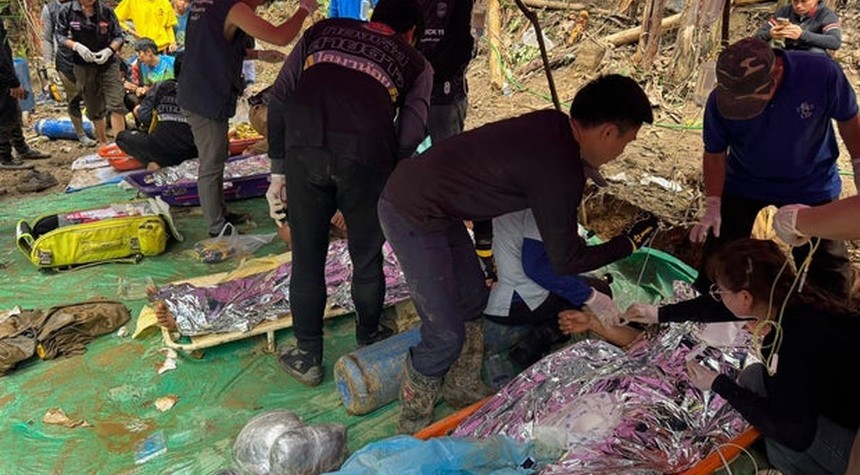
Four gold miners trapped for more than a week in a flooded cave system in Laos have been successfully rescued, marking a significant development in an operation that has tested the limits of international rescue expertise.
The rescue, confirmed by Rescue Volunteer for People, a Laotian organization coordinating the effort, occurred when receding water levels finally allowed divers to extract the men from their underground prison. The breakthrough came one day after another miner was freed in what rescuers described as an exceptionally dangerous operation.
The successful extraction represents a dramatic turn in circumstances. For days, rescue teams had struggled to pump water from the cave system with limited success. Divers who had been bringing food supplies to the trapped men discovered that water levels had dropped sufficiently to attempt an evacuation. Photographs from the scene show the rescued miners receiving medical attention, wrapped in thermal blankets and breathing through oxygen masks. Their precise medical conditions have not yet been disclosed.
The ordeal began ten days ago when seven miners entered the cave system. Even under normal conditions, the cave presents formidable challenges for entry and exit. When monsoon rains flooded the passages, the situation became critical. Five of the seven miners were located in one section of the cave earlier this week.
The first successful rescue on Friday illustrated the extraordinary risks involved. Lead rescuer Mikko Paasi described the operation as a “trust-me dive,” acknowledging that the trapped miners had no opportunity for the extensive training typically required for such technical underwater navigation. Paasi and his team essentially positioned themselves on either side of the miner, guiding him through partially submerged passages that would challenge even experienced cave divers.
“It’s not a nice place to dive,” Paasi stated, praising the mental fortitude of the rescued miner who managed to maintain composure under extraordinarily stressful conditions.
Two miners remain unaccounted for within the cave system. While Rescue Volunteer for People has pledged to continue search operations, the prospects appear grim. Paasi indicated earlier that rescuers believe the missing men have either perished or become trapped in spaces too confined for divers to access safely.
The incident bears troubling similarities to other cave rescue operations in Southeast Asia, where monsoon conditions can rapidly transform underground spaces into deadly traps. The region’s geology, combined with seasonal weather patterns, creates particular hazards for those working in cave systems.
The successful rescue of five miners demonstrates both the capabilities and limitations of modern rescue techniques. While international cooperation and expertise have saved lives, the operation also underscores the inherent dangers of mining operations in geologically unstable regions prone to sudden flooding.
As rescue teams continue their search for the two missing men, questions will inevitably arise about safety protocols and regulatory oversight of mining operations in remote areas. For now, however, the focus remains on the men who survived their underground ordeal and the dedicated rescue workers who risked their own lives to bring them home.
Related: Immigration Courts Implement Mass Hearing Procedures as Deportation Cases Accelerate