
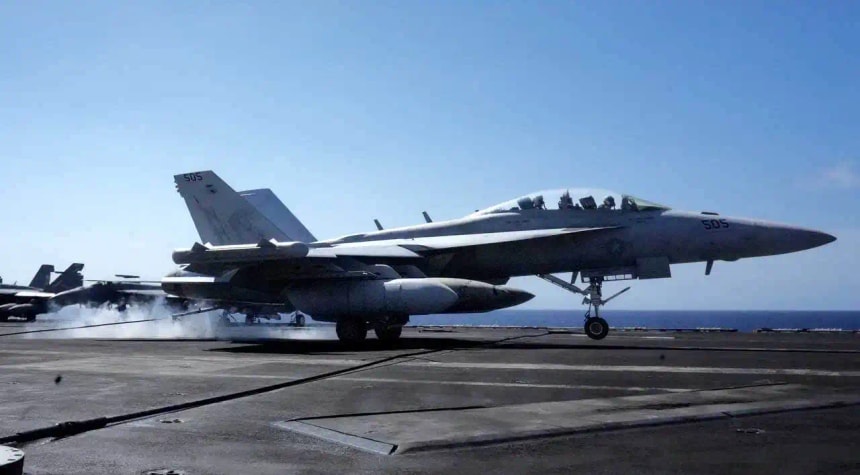
The United States Navy has once again positioned three aircraft carrier strike groups in the waters under the jurisdiction of Central Command, marking a significant augmentation of American military presence in the Middle East. The USS Theodore Roosevelt arrived in the region on Sunday, joining two other carrier groups already operating in those strategic waters.
The deployment represents a substantial concentration of American naval power in an area that has seen heightened tensions throughout this year. Each carrier strike group brings with it not merely the massive vessel itself, but an entire complement of destroyers, cruisers, aircraft squadrons, and thousands of personnel capable of projecting force across a wide radius.
This is not the first time the United States has maintained such a robust naval presence in the region this year. Three carriers were similarly positioned in these waters this past April, though that configuration was later reduced. The return to this elevated posture suggests Washington’s continued concern about stability in the Middle East and the security of vital shipping lanes through which much of the world’s oil supply passes.
The timing of this naval deployment coincides with ongoing difficulties in diplomatic relations with Tehran. Iranian Deputy Foreign Minister Kazem Gharibabadi has stated that his government will not permit International Atomic Energy Agency inspectors access to nuclear facilities until what he describes as "Iran’s conditions are met and the war has permanently ended." This reference to war appears to concern the broader regional conflict that has dominated headlines for more than eight months.
Gharibabadi elaborated on Iran’s position, indicating that access to nuclear sites remains contingent upon resolution of current disputes and establishment of what he termed "a diplomatic understanding." He specifically noted that the United States must alter its approach before Tehran will cooperate with international inspectors, a stance that places nuclear oversight in abeyance at precisely the moment when such transparency would seem most critical.
The implications of three American aircraft carriers operating in relatively close proximity cannot be understated. These floating airbases provide the United States with unmatched flexibility to respond to contingencies, whether humanitarian, defensive, or offensive in nature. They serve simultaneously as instruments of diplomacy and demonstrations of resolve.
The Roosevelt’s arrival also carries symbolic weight. Named for President Theodore Roosevelt, whose philosophy of speaking softly while carrying a big stick defined an era of American foreign policy, the carrier’s presence in these contested waters embodies that same principle a century later.
As diplomatic efforts continue between various parties seeking to deescalate tensions in the region, the physical presence of such substantial military capability ensures that American interests and those of allied nations remain protected. Whether this augmented naval posture leads to renewed diplomatic progress or simply maintains an uneasy status quo remains to be seen in the weeks ahead.
Related: United States Pursues European Engagement in Ukraine Peace Negotiations