
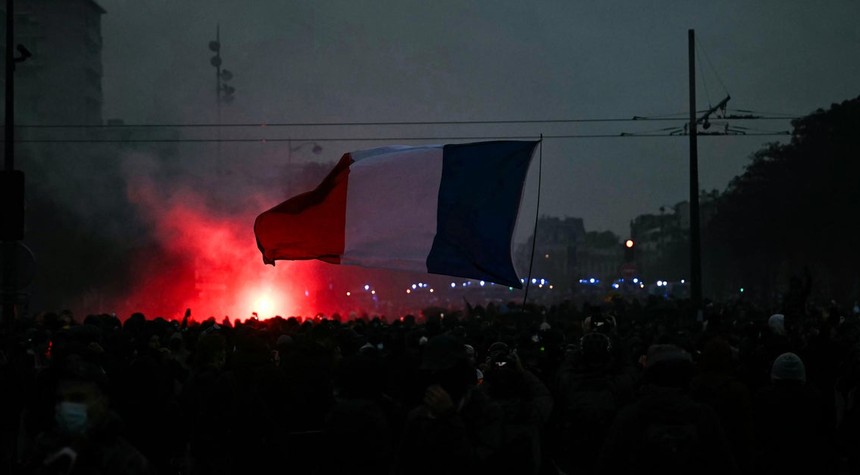
France found itself once again grappling with civil unrest this weekend as nearly 1,000 individuals were taken into custody following nationwide demonstrations that began peacefully but deteriorated into violence by day’s end.
Interior Minister Laurent Nuñez reported Saturday evening that while the day’s events had initially “passed off well” in cities across the nation, police forces encountered what he described as “an extremely elevated level of violence” from ultra-left agitators as darkness fell. The minister indicated that arrest numbers were expected to climb substantially in the coming hours.
The protests, organized around grievances concerning the cost of living and France’s education system, drew significant participation. The Interior Ministry counted approximately 410,000 demonstrators across 298 separate protests throughout the country. Union organizers from the General Confederation of Labor offered a markedly different figure, claiming roughly 800,000 participants. No immediate explanation was provided for this substantial discrepancy in crowd estimates.
French authorities had prepared extensively for potential disorder, deploying up to 70,000 police officers nationwide and supporting them with helicopters, armored vehicles, and water cannons. This massive security presence appeared to yield some measure of success. While shops were looted and property damaged, Nuñez noted that “the scale was far smaller” than the previous weekend’s disturbances, which saw some 3,000 businesses damaged or looted.
The minister credited improved police tactics, including more rapid response times and enhanced pre-demonstration security checks, along with better protection of commercial establishments and shopping centers.
In Paris, authorities had braced for significant trouble. Shops throughout the capital were boarded up, and various events were canceled as a precautionary measure. The atmosphere in the city, however, remained what officials described as “calm” for most of the day.
Thousands assembled at the Porte d’Italie on the city’s southeastern edge for an authorized demonstration. The location represented a last-minute change from the originally planned gathering at the Bastille, closer to the city center. Union representative Murielle Guilbert characterized it as “scandalous” that President Macron had prevented protesters from demonstrating “where we wish to demonstrate,” yet participants complied with the relocated venue.
Crowd size estimates for the Paris demonstration varied widely, with police counting 110,000 participants while union members claimed 250,000 attended.
As evening approached, the situation deteriorated. Nuñez reported that “several thousand radical activists” had congregated at the rear of the march, including approximately 500 individuals identified as known rioters. Clashes between these elements and police forces erupted as the demonstration concluded.
Prior to the day’s events, authorities had confiscated an alarming array of weapons during security checks, including metal balls, lead pellets, fireworks, slingshots, steel balls, improvised weapons, a katana sword, and airsoft weapons.
The Interior Minister announced that authorities would remain “on high alert” through the night and into Sunday, suggesting that France’s struggle to balance the right to peaceful assembly with maintaining public order remains unresolved.
This weekend’s events, while less destructive than the previous week’s violence, underscore the persistent social tensions facing the French government and the challenge of addressing citizen grievances while preventing organized extremist elements from exploiting legitimate protests for destructive purposes.
Related: Iranian Threats Reach Critical Stage as State Department Orders Embassy Drawdowns