
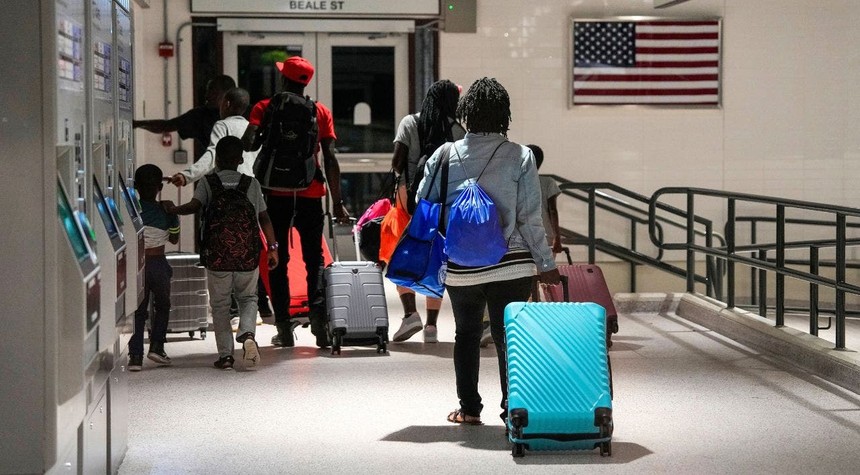
The Department of Homeland Security announced Wednesday the termination of Temporary Protected Status for Haitian migrants currently residing in the United States, a decision that will affect approximately 353,000 individuals when their protected status expires in February.
The agency issued a federal register notice indicating that Secretary Kristi Noem determined Haiti no longer meets the statutory requirements necessary to maintain the designation. This conclusion followed consultation with interagency partners and a comprehensive review by U.S. Citizenship and Immigration Services.
“An analysis indicated that allowing Haitian nationals to remain temporarily in the United States is inconsistent with U.S. national interests,” the Department stated in its official release.
Temporary Protected Status has served as a shield against deportation for eligible migrants while simultaneously granting them legal work authorization during periods when conditions in their home countries remain unsafe or untenable. Haiti first received this designation in 2010 following a devastating earthquake, and successive administrations have extended or redesignated the status repeatedly over the past fifteen years.
The previous administration extended TPS for Haitians in 2024, citing what it described as “simultaneous economic, security, political, and health crises” afflicting the Caribbean nation. That extension was scheduled to remain in effect through February 3, 2026.
The Department of Homeland Security has instructed affected Haitian migrants to prepare for departure if they possess no other lawful basis for remaining in American territory. The agency has advised them to utilize the U.S. Customs and Border Protection CBP Home mobile application to report their departure. The department described this as a “secure and convenient self-deportation process” that includes a complimentary plane ticket, a one thousand dollar exit bonus, and the possibility of future opportunities for legal immigration to the United States.
Haiti’s circumstances have deteriorated markedly in recent years. The nation has endured a cascade of natural disasters and political violence that has left its governmental structures severely compromised. The 2021 assassination of President Jovenel Moïse effectively caused governance to collapse, creating dangerous power vacuums throughout the country.
Criminal gangs have exploited this instability, with kidnappings and lawlessness surging in the absence of effective law enforcement. The United Nations has reported that violent criminal organizations maintain near-total control of Port-au-Prince, the nation’s capital.
The migration crisis has manifested in various forms, including maritime interdictions. Coast Guard personnel intercepted 132 Haitians aboard a vessel earlier this year, illustrating the ongoing attempts by Haitian nationals to reach American shores.
The decision to terminate Temporary Protected Status represents a significant shift in policy toward Haitian migrants who have built lives in communities across the United States during their years of protected status. The February deadline now sets in motion a complex process that will test both the administrative capacity of federal agencies and the resilience of the affected migrant population as they face an uncertain future.
Related: Former Brazilian President Bolsonaro Begins Prison Term After Coup Conviction