
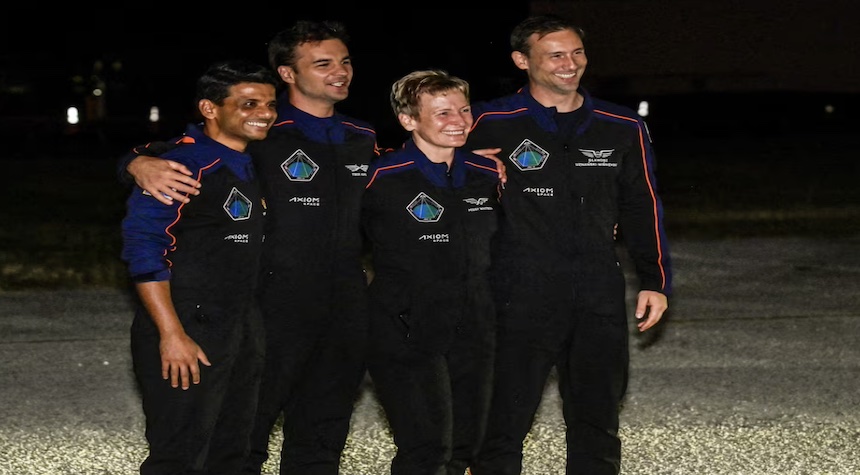
A multinational crew of four astronauts has successfully launched from Cape Canaveral, Florida, bound for the International Space Station. This mission, designated Axiom 4, marks a significant milestone in space exploration for several nations.
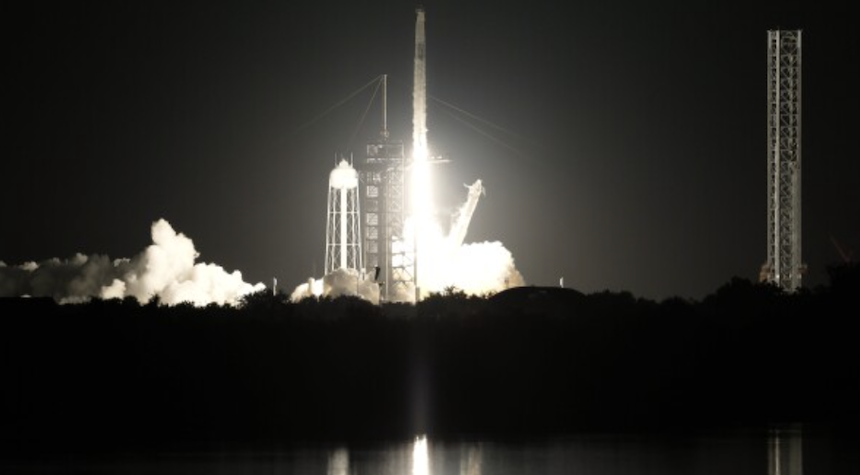
The launch occurred at approximately 2:30 a.m. Eastern Daylight Time from NASA’s Kennedy Space Center. The crew departed aboard a SpaceX Falcon 9 rocket, carrying a Crew Dragon capsule christened “Grace.” This marks the fifth orbital flight for the mission commander, former NASA astronaut Peggy Whitson, now a private citizen.
Joining Whitson are three first-time space travelers: Shubhanshu Shukla of India, Sławosz Uznański-Wiśniewski of Poland, and Tibor Kapu of Hungary. For these three nations, this mission represents their first participation in an International Space Station expedition, a noteworthy achievement in their respective space programs.

This flight, organized by the private company Axiom Space in partnership with SpaceX, exemplifies the growing commercialization of space travel. It also demonstrates the increasing accessibility of orbital missions to nations beyond the traditional space powers.
Reports indicate that the crew is expected to dock with the International Space Station after a 28-hour journey. Once aboard, they will conduct scientific research in microgravity conditions over a planned 14-day stay. The current ISS inhabitants, a mix of American, Japanese, and Russian personnel, are prepared to welcome their new colleagues.
This development follows earlier reports that Axiom Space intends to construct its commercial space station in the coming years. The company views these missions as stepping stones toward that ambitious goal, as NASA contemplates the retirement of the ISS around 2030.
The evidence suggests that private enterprise is playing an increasingly vital role in space exploration. However, it’s important to note that NASA continues to provide crucial support, including the use of launch facilities and oversight once the crew reaches the space station.
To conclude, as this mission unfolds, it raises important questions about the future of international cooperation in space and the balance between government and private sector involvement in orbital ventures. The coming days will likely provide further insights into these evolving dynamics.