
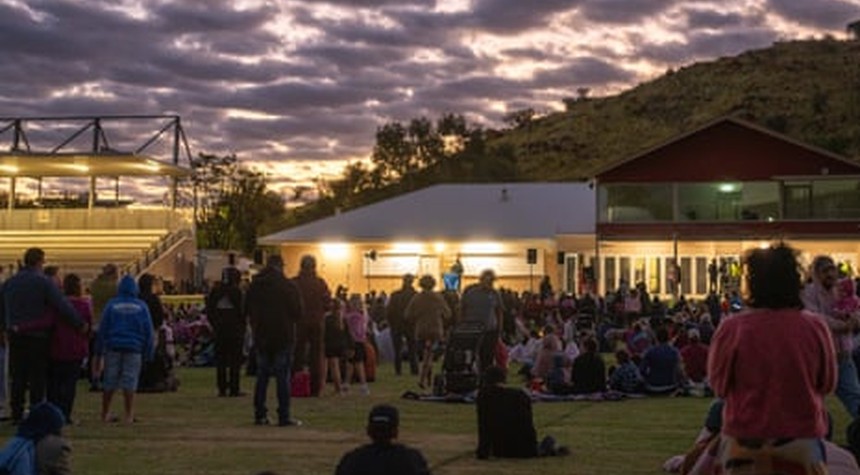
Hundreds of Australians gathered in cities across the continent Thursday evening to honor the memory of a five-year-old Aboriginal girl whose death has shaken the nation to its core.
Kumanjayi Little Baby, a Warlpiri child, was found dead in Alice Springs last week after a five-day search that gripped communities from the Northern Territory to the urban centers of Melbourne and Canberra. The circumstances surrounding her death remain under investigation, though authorities have indicated they are treating the case as a homicide.
The vigils, marked by candles, pink ribbons, and the lowering of Aboriginal and Torres Strait Islander flags to half-mast, represented something more than collective grief. They stood as a testament to the enduring bonds within Australia’s First Nations communities and the profound challenges they continue to face.
At the Aborigines Advancement League in Melbourne, approximately 400 people assembled in a demonstration of solidarity that transcended the typical boundaries of such gatherings. Attendees were welcomed with a traditional smoking ceremony before observing a minute of silence. Flowers accumulated beneath the flags as the crowd, many dressed in pink, stood in solemn reflection.
Uncle Graham “Boots” Cooper, a Yorta Yorta Elder who provided the welcome to country, spoke with the measured wisdom that comes from years of community leadership. His words carried the weight of experience tempered by sorrow.
“What we are doing is remembering a beautiful little girl, but at the same time, to honor her and her family and to make sure that her family is strong through our presence here,” he said. He expressed hope that the nationwide demonstrations of support would provide some measure of comfort to the grieving family in Alice Springs.
The Elder’s message extended beyond mourning to a practical appeal for vigilance. While acknowledging the difficulty of constant supervision, he urged families to remain watchful of their children, a reminder that resonates with particular urgency in communities that have experienced disproportionate rates of violence and loss.
In Canberra, approximately one hundred people gathered at the Aboriginal tent embassy near Old Parliament House. The gathering maintained a largely silent character, with mourners holding candles against the cold evening air. The scene was awash in pink, from beanies to small ribbons pinned to winter coats.
Traditional owners of Ngunnawal country conducted a smoking ceremony as the sun set over the capital. Flowers, wreaths, and a simple cross adorned with pink fairy wings marked the site where Elders, parents, and children stood together in shared grief.
Amid this outpouring of national mourning, the organization representing First Nations children has issued a pointed call for restraint. They have urged an end to what they describe as the politicization of this tragedy, seeking to preserve the dignity of the child’s memory and the privacy of her family during an impossibly difficult time.
The death of Kumanjayi Little Baby has forced Australians to confront uncomfortable questions about child safety, community resources, and the particular vulnerabilities faced by Aboriginal children in remote communities. As the investigation continues, the focus of these vigils remains clear: to honor a young life cut short and to stand with a family in their darkest hour.
And that is the way it is.
Related: Citadel CEO Shifts Investment Focus to Miami After New York Tax Proposal