
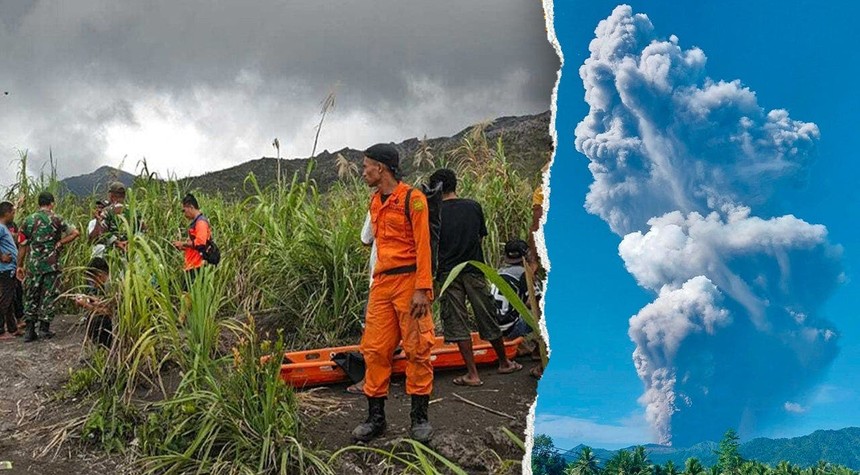
Three individuals lost their lives and five others sustained injuries Friday when Mount Dukono erupted on Indonesia’s remote Halmahera island, claiming victims who had deliberately entered a restricted volcanic zone despite explicit safety warnings from authorities.
The tragedy unfolded when approximately twenty climbers departed Thursday to ascend the 1,355-meter volcano, fully aware that access to the mountain had been prohibited due to its elevated alert status. North Halmahera police chief Erlichson Pasaribu confirmed that the climbers knowingly violated safety restrictions that had been established to protect lives.
“They were aware that climbing was prohibited as the mountain is a restricted zone due to its high alert status, but insisted on going ahead,” Pasaribu stated in remarks to authorities.
The incident raises troubling questions about the influence of social media culture on personal safety decisions. According to Pasaribu, despite prominent warnings posted on social media platforms and physical signage erected at the site itself, “many people remain determined to climb, driven by the desire to create online content.”
This is not merely a local Indonesian problem. The phenomenon of individuals placing themselves in mortal danger to capture dramatic photographs or video for social media platforms has become a global concern, with authorities worldwide struggling to balance personal freedom against public safety imperatives.
Mount Dukono’s eruption released a substantial ash cloud high into the atmosphere, creating hazardous conditions that vindicated the very warnings these climbers chose to ignore. The volcano, located on Halmahera island in Indonesia’s eastern archipelago, has maintained an elevated threat level precisely because of such unpredictable volcanic activity.
Indonesia sits along the Pacific Ring of Fire, a horseshoe-shaped geological zone characterized by intense seismic and volcanic activity. The nation hosts more than 120 active volcanoes, making it one of the most volcanically active regions on Earth. Indonesian authorities have developed sophisticated monitoring systems and restriction protocols specifically to prevent tragedies of this nature.
The deaths on Mount Dukono represent a preventable loss of life. When authorities designate an area as restricted and place a volcano on high alert status, these decisions stem from scientific assessment and genuine concern for public welfare, not bureaucratic overreach.
The question now facing Indonesian authorities is whether existing penalties for violating safety restrictions prove sufficient to deter such reckless behavior. Some jurisdictions have begun implementing financial penalties for individuals who require emergency rescue services after deliberately violating safety restrictions, forcing taxpayers to bear the cost of rescuing those who knowingly endangered themselves.
As this tragedy demonstrates, the pursuit of social media content has created perverse incentives that can override basic survival instincts. Three families now mourn loved ones who might be alive today had they heeded clear, unambiguous warnings from authorities who understood the mountain’s dangers far better than any social media audience ever could.
The five injured individuals remain under medical care. Indonesian authorities continue to monitor Mount Dukono’s activity while reinforcing warnings that the mountain remains strictly off-limits to climbers.
Related: Authorities Question Timing of Oil Market Bets Totaling $2.6 Billion During Iran Conflict