
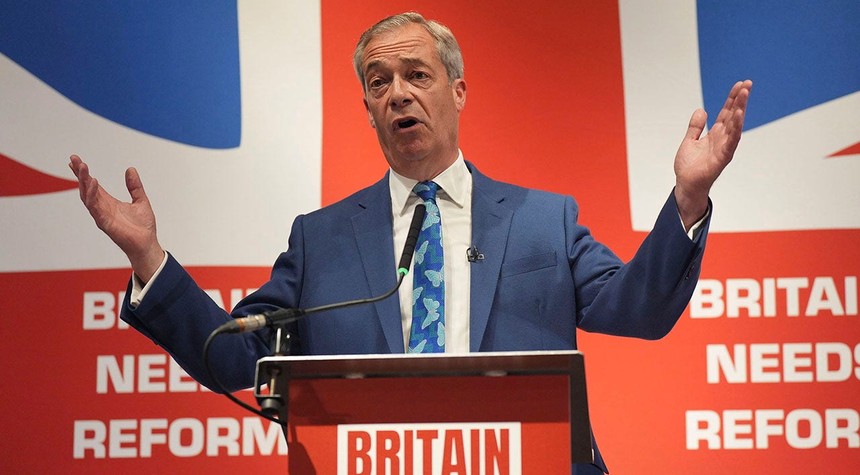
The United Kingdom’s political landscape underwent a seismic shift Thursday as the ruling Labour Party suffered devastating losses in local elections, with Nigel Farage’s Reform UK party capturing hundreds of council seats and taking control of entire local authorities.
With just over half of the councils reporting results, Labour has surrendered a net loss of nearly 500 local council seats, marking one of the most significant electoral reversals for a governing party in recent British political history. Reform UK, the right-wing populist party led by Farage, claimed its first-ever council majority by taking control of Havering in East London, a symbolic victory that Farage characterized as “historic.”
These local elections traditionally serve as a referendum on the popularity and performance of the national government. The results paint a troubling picture for Prime Minister Keir Starmer, who assumed office with promises of transformative change. Instead, voters across the United Kingdom, particularly in Labour’s traditional strongholds in northern England, have delivered an unmistakable message of discontent.
Labour Member of Parliament Jon Trickett acknowledged the severity of the situation, stating that voters in northern England and elsewhere feel the government’s direction has failed to deliver the change they expected. He characterized the electorate as angry, upset, and betrayed, calling for immediate changes in party leadership to salvage Labour’s political standing.
The rebellion within Labour’s own ranks has grown increasingly vocal, with multiple MPs publicly demanding that Starmer establish a timeline for his departure from office. Such internal dissent represents a critical threat to any governing party’s stability and raises questions about Labour’s ability to maintain coherent leadership through the remainder of its term.
Starmer has acknowledged responsibility for the electoral losses but firmly rejected immediate resignation calls. He argued that stepping down now would plunge the country into chaos, though he notably stopped short of ruling out a managed transition of power at a later date. This calculated ambiguity suggests the Prime Minister recognizes the precarious nature of his position while attempting to maintain authority in the short term.
The rise of Reform UK represents a broader trend observable across Western democracies, where populist movements have capitalized on public frustration with establishment parties. Farage, a veteran political disruptor who played a pivotal role in the Brexit campaign, has positioned Reform UK as the voice of voters who feel abandoned by both major parties.
The Conservative Party, serving as the official opposition, has also suffered losses in these elections, suggesting that British voters are rejecting the political establishment wholesale rather than simply rotating between traditional alternatives. This creates an opening for Reform UK to position itself as a genuine third force in British politics.
The timing of these losses compounds Starmer’s difficulties, as his government already faces criticism over various policy decisions and appointments. The convergence of electoral defeat and internal party discord creates a volatile situation that could fundamentally alter the trajectory of British politics in the months ahead.
As the final results continue to emerge, the question facing the United Kingdom is not merely whether Starmer can survive politically, but whether the traditional two-party system itself can withstand the populist challenge that Reform UK represents.