
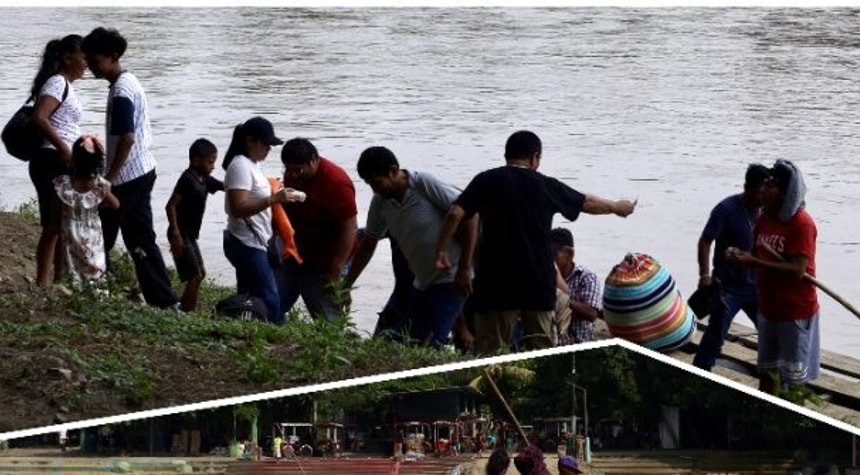
A migrant caravan numbering between three hundred and five hundred individuals crossed from Guatemala into Mexico on Friday, marking yet another organized movement toward the United States southern border. The timing of this crossing, coming on the heels of Democratic victories in recent elections including control of the House, Senate, and the Texas governorship, raises familiar questions about the intersection of American domestic politics and international migration patterns.
The group crossed the Rodolfo Robles International Bridge into Ciudad Hidalgo, Mexico, before beginning their northward journey to the municipality of Suchiate. This caravan represents the latest in a series of organized movements that appear to coincide with shifts in the American political landscape.
Similar patterns emerged in mid-October when another caravan departed from Mexico’s southern border shortly after it became apparent that Republicans faced significant electoral challenges. That earlier group, composed primarily of Central American migrants, initially identified itself as "Caravana Sin Fronteras" before adopting the name "Faith and Hope Number Two" in reference to a predecessor caravan that Mexican authorities had previously dispersed.
The Trump administration’s Department of Homeland Security issued an immediate and unequivocal response, stating that there exists absolutely no possibility this caravan would gain entry into the United States. Federal authorities have made clear their intention to enforce existing immigration law regardless of political developments.
Interviews conducted with members of the October caravan revealed that some participants explicitly expressed hope that Democratic electoral victories would lead to more favorable immigration policies. Such testimony raises serious questions about the legitimacy of asylum claims, as it suggests motivations rooted in political calculation rather than the qualifying hardships that asylum law requires.
Adding complexity to an already difficult situation, reports indicate that some caravan participants are individuals who faced deportation in recent months. Under federal law, re-entry after formal removal constitutes a felony offense carrying substantial penalties. First-time offenders face fines and up to two years imprisonment, while those with aggravated felony convictions on their records could face sentences of up to twenty years.
The phenomenon of migrant caravans forming in apparent response to American electoral outcomes demonstrates how deeply domestic political developments influence perceptions and decisions far beyond our borders. Whether accurate or not, beliefs about potential policy changes drive thousands of individuals to undertake arduous and potentially dangerous journeys northward.
The current situation presents a test of resolve for immigration enforcement authorities. Federal officials have drawn a clear line, warning prospective illegal entrants of the serious legal consequences they face. Yet the caravans continue to form, suggesting that many migrants believe the potential rewards outweigh the substantial risks.
This latest caravan underscores fundamental questions that remain unresolved in American immigration policy. How effectively can enforcement deter illegal entry? What role do electoral outcomes play in encouraging or discouraging migration flows? And perhaps most importantly, can the United States maintain the integrity of its immigration system while navigating the complex humanitarian and political considerations at stake?
The answers to these questions will emerge in the coming weeks and months as this caravan proceeds northward and as the newly elected officials take office. What remains certain is that immigration policy continues to present one of the most challenging and consequential issues facing the nation, with ramifications that extend far beyond our borders and deep into the heart of communities throughout the Western Hemisphere.
Related: Pope Leo XIV Defends Voting Rights After Casting Ballot from Vatican