
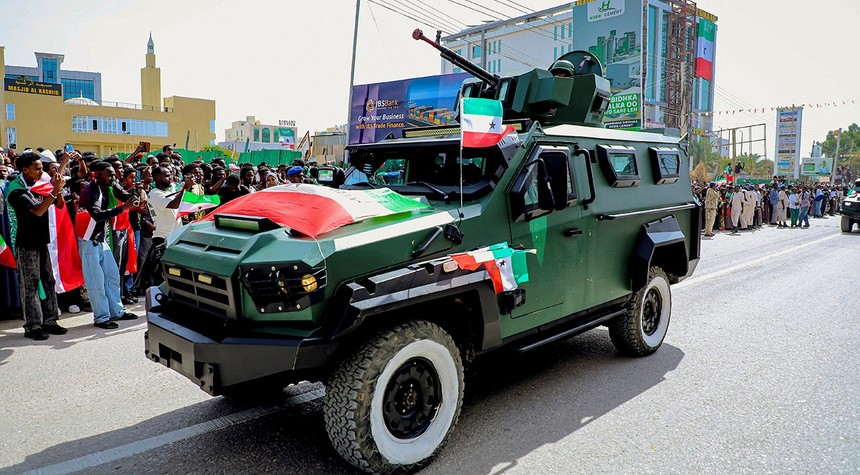
The flags of Somaliland flew proudly across the capital city of Hargeisa earlier this month as the breakaway African state celebrated its Independence Day. Yet beneath the festivities lies a geopolitical struggle of considerable consequence, one that could reshape the balance of power along one of the world’s most critical maritime corridors.
Intelligence assessments indicate that Iran views Somaliland as a significant threat to its regional ambitions, particularly regarding Tehran’s ability to project power through proxy forces in Yemen. The concern centers on Somaliland’s deep water port and airbase facilities, which could provide the United States, Israel, and other Western nations with a strategic foothold in the region.
Such Western access to Somaliland’s infrastructure would directly undermine Iran’s efforts to control Red Sea shipping lanes through the Houthi militant group, which operates from Yemen under Iranian direction and support. The Houthis have conducted numerous attacks on commercial vessels transiting these waters, creating substantial disruptions to international commerce.
The timing of these developments carries particular weight. The Bab-el-Mandeb Strait, which separates the Arabian Peninsula from the Horn of Africa, has emerged as the primary route for Middle Eastern oil shipments to Asian markets. This shift occurred after the Strait of Hormuz became increasingly unreliable for commercial transit, elevating the strategic importance of alternative passages.
Tehran has reportedly pressured its Houthi allies to intensify their campaign against shipping in the Bab-el-Mandeb region. These attacks have targeted both commercial and military vessels, raising insurance costs and forcing some shipping companies to seek longer, more expensive routes around the African continent.
Somaliland declared independence from Somalia in 1991, though it remains unrecognized by most of the international community. This lack of formal recognition has not prevented the territory from maintaining relative stability and developing functional government institutions, a notable achievement in a region plagued by conflict and instability.
The potential for Western military presence in Somaliland presents Iran with a strategic dilemma. American or Israeli forces operating from Somaliland could monitor and potentially interdict weapons shipments to the Houthis, conduct surveillance operations, and provide rapid response capabilities to protect commercial shipping. Such capabilities would significantly complicate Iranian operations in the region.
For the United States, Somaliland offers several advantages beyond its geographic position. The territory has demonstrated a commitment to counterterrorism cooperation and has maintained peaceful relations with neighboring states despite its disputed status. These factors make it an attractive partner for Western powers seeking to counter Iranian influence without the complications that often accompany engagement in the volatile Horn of Africa.
The situation reflects broader tensions in the region, where competing powers vie for influence over strategic chokepoints that control the flow of global commerce. As international shipping increasingly depends on the security of these narrow passages, the importance of stable partners like Somaliland becomes ever more apparent.
Whether this small African nation will ultimately host Western military assets remains uncertain, but the mere possibility has clearly registered in Tehran as a matter requiring serious attention.
Related: International Divers Discover Five Survivors in Flooded Laotian Cave