
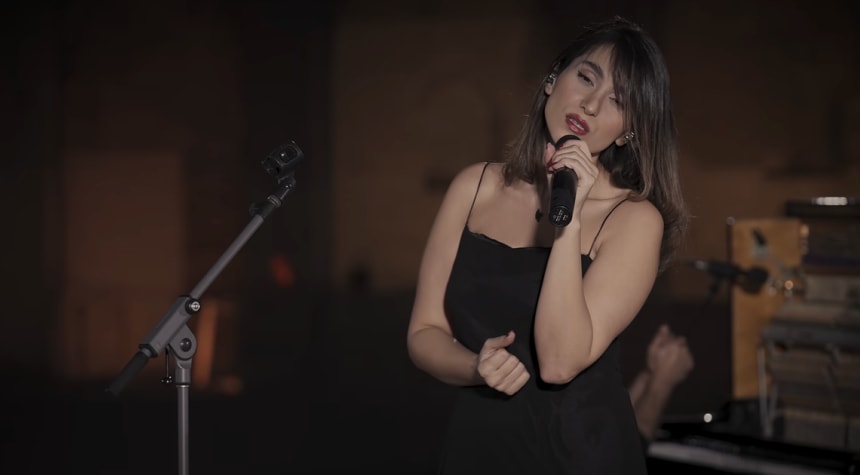
Iranian singer Parastoo Ahmadi presented herself to authorities in the holy city of Qom on Monday, where she was subjected to 74 lashes after being convicted of "outraging public decency." The punishment stems from a livestreamed concert performance in December 2024 during which she appeared without the head covering that Iranian law mandates for women.
The sentence, which was upheld by a local criminal court in September, was carried out after Ahmadi and four members of her production team complied with the court order to report to provincial authorities. According to her attorney, the conviction cited what the court termed "immoral" content posted online during her performance, which subsequently went viral throughout Iran.
The punishment extends beyond the physical lashing. Ahmadi and eight members of her production team now face a two-year ban on leaving the country and a two-year prohibition on all artistic activity. These restrictions effectively silence not only her voice but her ability to pursue her profession.
The concert in question took place at the Dayr-Gachin Caravanserai, an ancient site along the historic Silk Road. The performance incorporated themes of nationalism and popular uprising, and Ahmadi openly violated both the Islamic Republic’s mandatory dress code and the long-standing prohibition against women singing in public. These are not minor infractions in the eyes of Iranian authorities. They represent a direct challenge to the regime’s authority over public expression and women’s behavior.
The impact of Ahmadi’s punishment has resonated deeply among Iranian women, who see in her ordeal a reflection of their own struggles. A 41-year-old optician from Karaj, who gave only her first name as Marjan, expressed what many feel. She described experiencing a profound pain upon learning of the flogging, as though she herself had been punished for exercising personal freedom.
Marjan characterized Ahmadi as a symbol of resistance, noting that both the original concert performance and her acceptance of the punishment represent acts of defiance. She observed that the regime’s true fear lies not in women singing, but in citizens who courageously engage in activities that authorities have prohibited.
Another Iranian woman, a 32-year-old Tehran resident named Thoraya, framed the issue in terms of fundamental human rights. She asserted that no state possesses ownership over the voices of its citizens and that singing cannot be classified as criminal behavior. In her view, artistic expression cannot be made conditional upon political obedience.
The case illuminates the ongoing tension in Iran between individual liberty and state control. What authorities characterize as maintaining public decency, critics describe as the suppression of basic human rights. The severity of the punishment, the travel restrictions, and the ban on artistic activity suggest a regime determined to make an example of those who challenge its authority.
For the women who spoke about Ahmadi’s case, the connection runs deeper than political solidarity. They see her right to dress as she chooses and pursue her artistic career as inseparable from their own rights. In punishing one woman for exercising freedom of expression, the regime sends a message to all.
That the trial was held in Qom, one of Iran’s most religiously significant cities, adds weight to the symbolic nature of this case. The Islamic Republic appears intent on demonstrating that challenges to its religious and social codes will be met with swift and severe consequences, regardless of international opinion or domestic sympathy for those punished.
Related: Army Sergeant Admits Selling Military Secrets to Chinese Operatives for Personal Profit