
An Army sergeant stationed at Joint Base Lewis-McChord in Washington has pleaded guilty to selling classified military information to operatives connected to the Chinese government, concluding a betrayal of trust that spanned more than three years and endangered American national security interests.
Sergeant Jian Zhao, age thirty-seven, admitted to conspiring to gather, transmit, and transfer national defense information in a scheme that netted him at least ten thousand dollars and potentially more. The Justice Department announced the guilty plea this week, marking another troubling chapter in America’s ongoing struggle to protect sensitive military intelligence from foreign adversaries.
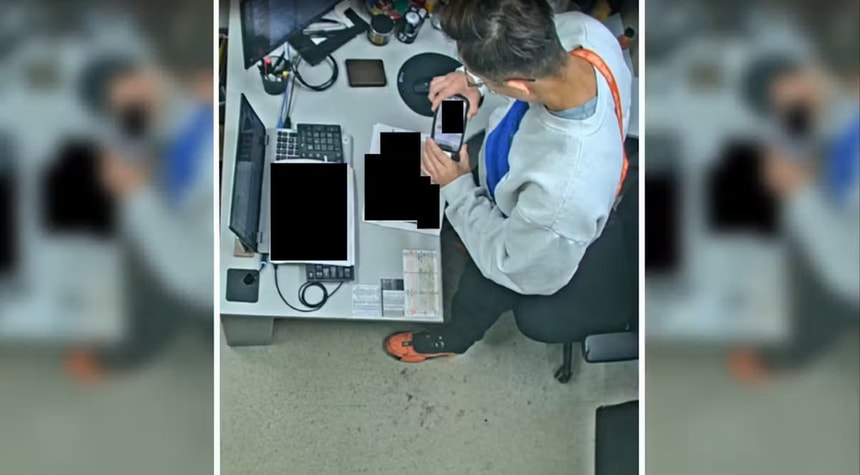
The facts of the case are sobering. Surveillance footage captured Zhao using his personal cellular telephone to photograph classified military documents. Federal agents who arrested him at his residence in Lacey, Washington, discovered thirty thousand dollars in cash and several government-owned hard drives, some bearing the classifications of "SECRET" and "TOP SECRET."
The materials Zhao sold included technical manuals for the High Mobility Artillery Rocket System, a cornerstone of American mobile artillery capability. He also compromised documents addressing potential military conflict scenarios between the United States and China. The gravity of these breaches cannot be understated, as such information provides adversaries with critical insights into American military capabilities and strategic planning.
Court documents reveal the calculated nature of Zhao’s actions. In electronic communications with individuals he understood to be connected to China, Zhao discussed the sale of encryption-capable computers and inquired whether his contacts needed intelligence. In one message, he displayed a cavalier attitude toward his betrayal, stating regarding the sale of an encryption-capable computer that if safety and profit could be guaranteed, he would proceed with the transaction because it was the end of the year.
The conspiracy extended beyond Zhao himself. He was recruited by Ruoyu Duan, a former Army soldier who pleaded guilty earlier this year to conspiracy to transmit national defense information. This recruitment pattern suggests a broader network working to compromise American service members and extract classified information for foreign interests.
Brigadier General Sean Stinchon, commanding general of Army Counterintelligence Command, addressed the significance of the case directly. The guilty plea, he stated, reflects a deliberate betrayal of the oath every soldier takes to defend the nation and safeguard fellow service members. By trading access to sensitive military information and government equipment for personal profit, Zhao undermined operational security and placed soldiers at risk.
The scheme operated from November 2021 through March 2025, a period during which tensions between the United States and China have remained consistently elevated. The timing makes the breach particularly concerning, as military planners rely on the security of such information to maintain strategic advantages.
Zhao faces up to ten years in federal prison and a fine of two hundred fifty thousand dollars when he appears for sentencing next year. These penalties, while substantial, serve primarily as a deterrent and a statement that such betrayals will be prosecuted to the fullest extent of the law.
This case underscores a vulnerability that extends beyond technology and security protocols. It is a reminder that human reliability remains central to national security, and that the trust placed in those who serve must be honored. When that trust is violated, as it was here, the consequences extend far beyond one individual’s criminal liability. They touch the security of every service member and every American citizen who depends on a strong national defense.
Related: COP31 Talks Break Down Over Dispute on Fossil Fuel Commitments