
The White House Correspondents’ Association finds itself navigating the delicate balance between national security imperatives and the fundamental responsibility of maintaining an accurate historical record of presidential movements.
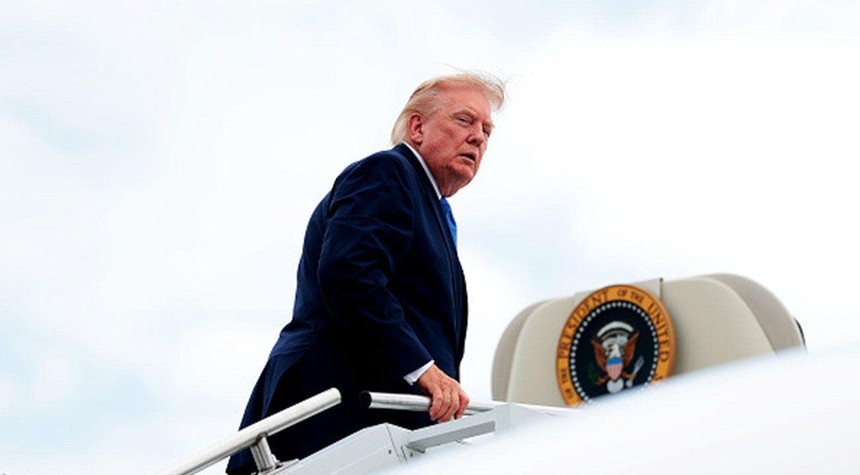
Last month, President Donald Trump switched aircraft during his return from a NATO summit, a security measure that remained unknown to the press pool traveling with him. The reporters and some White House staff remained aboard the original plane, unaware the president had already departed on an alternate aircraft. This extraordinary measure came in response to what officials characterized as a credible threat from Iran against the president’s life.
The incident came to light through recent reporting, prompting immediate concern within the press corps about two critical issues: the physical safety of journalists who remained on what could have been a targeted aircraft, and the integrity of the pool reporting system that has served as the official record of presidential activities for generations.
Jacqui Heinrich, the newly elected president of the White House Correspondents’ Association, moved swiftly to address these concerns. Following the report’s publication, she consulted with association members who were on the flight and received input from various news organizations’ managers and pool coordinators. She then met directly with senior Trump administration officials to convey the press corps’ concerns.
The association’s position acknowledges the reality of genuine security threats and the Secret Service’s paramount duty to protect the president. There are circumstances, Heinrich indicated, when operational security necessarily limits what can be shared with reporters in real time. This is understood and accepted.
However, the association has advocated for establishing protocols that would allow reporters to correct the record once security concerns have passed. Without such mechanisms, reporters face a troubling predicament: they may transmit information based on their direct observations that later proves inaccurate through no fault of their own. This undermines the credibility of the pool system itself.
The pool reporting system exists to ensure an independent journalistic record of presidential movements and activities. It serves not merely the immediate needs of news organizations, but the historical record itself. When pool reporters unwittingly transmit misleading information, it creates uncertainty about the reliability of their observations and reporting.
The matter extends beyond professional pride. If journalists cannot trust their own observations, or if those observations are rendered unreliable by undisclosed security measures, the entire framework of independent presidential coverage faces erosion. This serves neither the press corps nor the White House well.
The association seeks to establish clear understandings about how such situations will be handled in the future. The goal is straightforward: preserve the ability of the press to maintain an accurate historical record while respecting legitimate security requirements.
This incident reflects the ongoing tension between transparency and security in an age of heightened threats against American leadership. The threat from Iran is real and documented. The president’s security cannot be compromised. Yet the principle of an independent press maintaining an accurate record of presidential activities remains essential to the functioning of American democracy.
The White House Correspondents’ Association appears to have approached this matter with appropriate seriousness, recognizing both the legitimacy of security concerns and the necessity of preserving journalistic credibility. The outcome of these discussions will likely establish precedents for how similar situations are handled in the future.
Related: Asylum Seeker Says Force-Feeding at ICE Facility Left Lasting Psychological Harm