
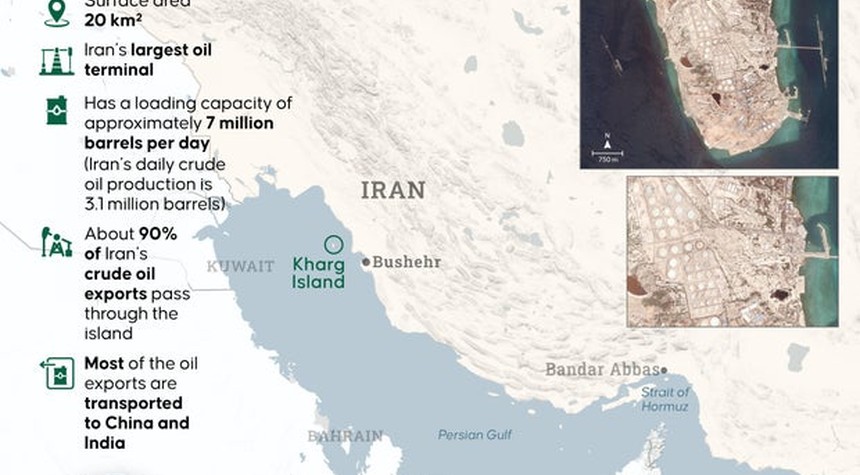
President Trump indicated on June 11 that the United States may seize Kharg Island and additional Iranian oil infrastructure in the near future, as hostilities between the two nations showed signs of renewed intensity. The conflict, which began as a joint American-Israeli operation on February 28, has placed this strategically vital piece of territory at the center of military and economic calculations.
In remarks following his social media statement, the President expressed uncertainty about whether the American public possesses the resolve for an operation to capture the Iranian island. This candid assessment comes as military planners continue evaluating options in a conflict that has already demonstrated the vulnerability of Iranian oil operations.
The United States military reported in March that strikes conducted on the 13th of that month had completely destroyed every military installation on Kharg Island. That operation brought international attention to this small but consequential piece of ground situated merely 20 miles from Iran’s northern Gulf coastline.
For decades, Kharg Island has functioned as the primary export terminal for Iranian crude oil, historically managing between 85 and 95 percent of the nation’s oil shipments. Tankers load their cargo at the island’s facilities before navigating through the Persian Gulf and the strategically critical Strait of Hormuz. The destruction of these loading capabilities would effectively eliminate Iran’s capacity to export oil, dealing a severe blow to the Islamic Republic’s principal revenue source.
The island’s strategic value extends beyond its immediate economic impact. President Trump has indicated that control of Kharg could serve as leverage to compel Iran to cease its threats against the Strait of Hormuz and Persian Gulf nations. National security analysts have noted that the President has established a clear linkage between the island’s vulnerability and Iran’s continued disruption of critical shipping lanes.
Approximately 20 percent of global oil supplies traditionally transit through the Strait of Hormuz. Iranian attacks on shipping and Gulf state targets have substantially reduced traffic through this vital waterway since hostilities commenced. Global oil prices have risen approximately 30 percent since the war’s beginning, and additional strikes on Iranian oil infrastructure could drive prices higher still.
The economic dimensions of this conflict cannot be separated from the military considerations. Iran’s oil revenue, derived primarily from sales to China, remains essential to funding the Islamic Republic’s operations. American strikes targeting this revenue stream represent a calculated effort to apply financial pressure even as direct military engagement continues.
This is not the first time Kharg Island has occupied a central position in regional warfare. During the Iran-Iraq War of the 1980s, the island’s facilities became regular targets, demonstrating both its enduring strategic importance and its vulnerability to military action.
The President’s acknowledgment of potential domestic resistance to an island seizure operation reflects the complex political calculations underlying military decision-making. As this conflict continues, the question of American resolve may prove as significant as tactical considerations on the ground.
The coming days will reveal whether the administration proceeds with operations against additional Iranian infrastructure, and whether Kharg Island becomes not merely a target for strikes but territory under American occupation.
Related: Iranian Drone Attack on US Apache Helicopter Triggers Series of Retaliatory Strikes