
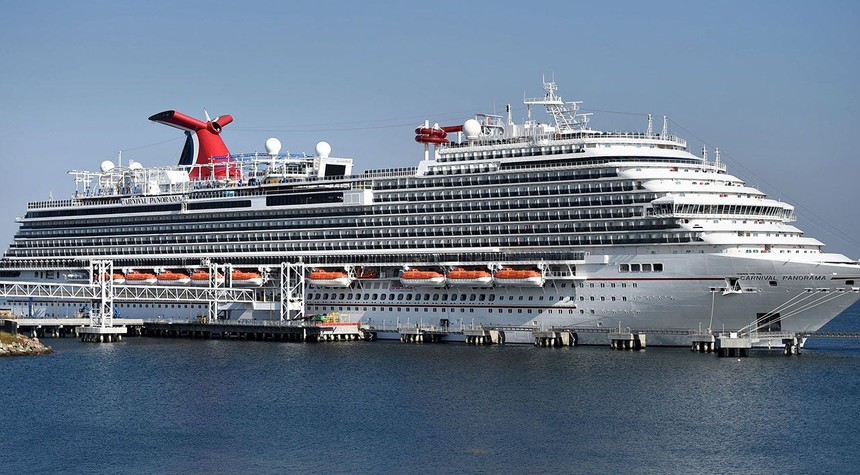
A male passenger jumped overboard from the Carnival Panorama cruise ship on Saturday as the vessel sailed from Puerto Vallarta, Mexico, toward its home port of Long Beach, California, marking the final full day of a week-long voyage.
The incident, confirmed by Carnival Cruise Line, occurred after the ship had departed Puerto Vallarta at 8 p.m. Thursday evening. According to the cruise line’s statement, when crew members were notified of a missing guest, the ship’s team immediately initiated search and investigation procedures. These included a thorough review of closed-circuit television footage, which ultimately confirmed the passenger had gone overboard.
Both the United States Coast Guard and Mexican Coast Guard authorities were notified and assumed responsibility for search and rescue operations. The company stated it is providing support to the family members who were traveling with the guest.
The sequence of events, as reported by passengers aboard the vessel, unfolded throughout Saturday. Initial announcements regarding a missing guest began at approximately 11 a.m. These announcements were repeated multiple times over the subsequent hours as crew members worked to locate the individual.
At about 3 p.m., the ship reversed course. A half hour later, passengers received notification of a shipwide search. All guests were instructed to return to their staterooms immediately. Security personnel then proceeded to visit each stateroom to scan guests’ ship identification cards, a standard protocol during such emergencies.
An hour after the search began, passengers remained confined to their quarters as the operation continued. At approximately 5 p.m., the captain and cruise director made an announcement confirming that security camera footage had verified the guest had gone overboard. At that point, local maritime authorities had taken over the search and rescue operation, and passengers were permitted to leave their staterooms.
The Carnival Panorama had embarked from Long Beach on September 13 for what was scheduled as a standard week-long cruise along the Mexican coast. The vessel had completed its final port call at Puerto Vallarta before beginning the return journey to California when the incident occurred.
This tragic event underscores the ongoing challenges of passenger safety aboard large cruise vessels, even as modern surveillance technology and standardized emergency procedures have improved response capabilities. The cooperation between the cruise line and both American and Mexican maritime authorities demonstrates the international coordination required when incidents occur in international waters.
The cruise industry has continued to refine its protocols for man overboard situations, though such incidents remain among the most difficult emergencies cruise lines face. The rapid deployment of search procedures and the swift verification through video surveillance in this case represent standard industry practices developed over decades of maritime passenger operations.
The investigation into the circumstances surrounding this incident will likely continue as authorities work to understand what led to this tragedy.
Related: Buffalo Bills Draw Criticism for Playing Canadian Anthem at Stadium Opener