
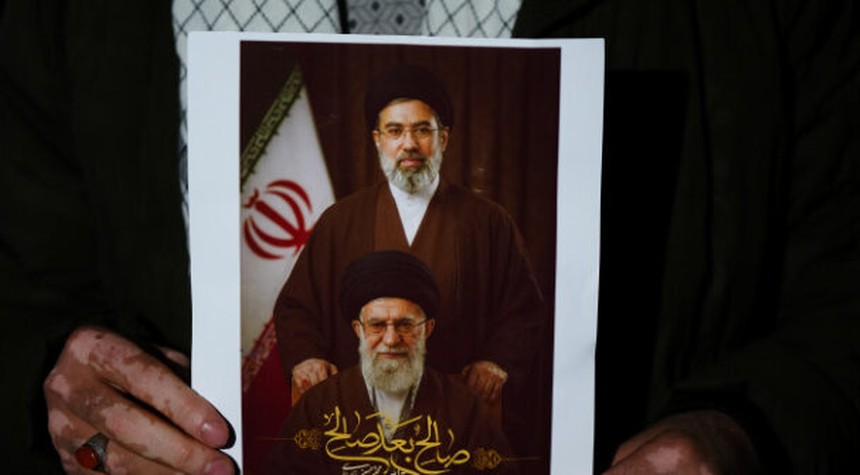
The American intelligence community has reached a troubling conclusion about Iran’s new supreme leader. Mojtaba Khamenei, who assumed power following his father’s death in the opening strikes of Operation Epic Fury, appears significantly more willing to pursue nuclear weapons than his predecessor.
The assessment, which draws heavily from intelligence gathered before the current conflict, represents a concerning shift in Tehran’s nuclear posture at the highest levels of Iranian leadership. United States officials briefed on the intelligence indicate that the younger Khamenei demonstrates far less hesitation about developing nuclear weapons than his father, Ayatollah Ali Khamenei, who led Iran for decades.
This finding carries particular weight given the circumstances surrounding Mojtaba’s ascension to power. Reports indicate he sustained serious injuries in the same attack that killed his father and has not appeared publicly since assuming Iran’s highest office. His absence from public view and limited communications have complicated efforts to assess his current intentions with precision.
Despite these concerns about the new supreme leader’s inclinations, American officials emphasize they have detected no evidence that Iran has resumed nuclear enrichment or weaponization activities since the conflict began. The distinction is significant. Rather than immediately attempting to rebuild the nuclear facilities that were destroyed or severely damaged during Operation Epic Fury, Tehran appears focused on a different strategy: preservation.
Intelligence suggests Iran has concentrated its efforts on protecting surviving nuclear assets and expertise that could eventually enable a revival of the program. This approach reflects a longer-term calculation, one that accepts current limitations while positioning the regime to rebuild when circumstances permit.
Of particular concern to Washington and Jerusalem is the movement of nuclear equipment toward the Pickaxe Mountain complex near Natanz. This heavily fortified underground facility, which Iran has not officially declared, has emerged as a focal point of Western intelligence efforts. The site’s defensive characteristics make it far more difficult to target than surface facilities, raising questions about what capabilities Iran might preserve there.
The assessment presents American policymakers with a complex challenge. On one hand, Iran’s nuclear program has sustained devastating damage that will take years to rebuild under the best circumstances. On the other hand, the regime now appears led by someone more fundamentally committed to acquiring nuclear weapons than his predecessor.
This dynamic underscores the limitations of military action against nuclear programs. While strikes can destroy facilities and set back timelines, they cannot eliminate the knowledge and determination that drive such programs. As long as Iran retains technical expertise and some surviving infrastructure, the potential for reconstitution remains.
The international community now faces the question of how to address this threat. The current damage to Iran’s nuclear program represents a significant but temporary setback. Whether that setback becomes permanent depends largely on sustained pressure and monitoring in the years ahead.
For now, the focus remains on ensuring Iran cannot quietly rebuild what was destroyed. But the intelligence community’s assessment of Mojtaba Khamenei’s intentions serves as a reminder that the fundamental challenge has not changed. It may, in fact, have intensified.
Related: Saudi Arabia Must Join Regional Peace Framework Before Nuclear Pact Proceeds