
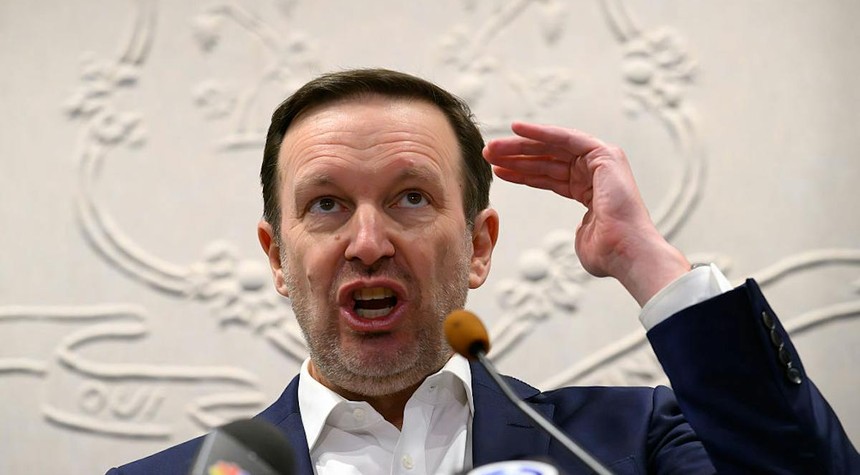
Connecticut Senator Chris Murphy returned from Doha this week with renewed praise for American universities operating in Qatar, even as those same partnerships face intensifying scrutiny from his colleagues on Capitol Hill.
Murphy, who serves on both the Senate Health, Education, Labor, and Pensions Committee and the Foreign Relations Committee, met with Qatari officials over the weekend. The visit included discussions with Sheikha Hind Al Thani, vice chairperson of the Qatar Foundation, which finances Education City, a sprawling academic complex in Doha that hosts American university campuses.
“The presence of American universities in Qatar is an important way for the United States to promote U.S. values in the Middle East and create more lasting people-to-people connections,” Murphy stated following the meeting.
That assessment stands in marked contrast to the concerns raised by congressional investigators examining these partnerships. Education City houses campuses operated by Georgetown, Texas A&M, Virginia Commonwealth University, Cornell’s Weill Cornell Medicine, Carnegie Mellon, and Northwestern University. Several of these programs have become subjects of congressional hearings.
During testimony before Congress in May 2024, Northwestern’s then-president acknowledged being disturbed by the relationship between the university’s Qatar campus and Al Jazeera, the state-funded Qatari media outlet that has drawn criticism for its editorial positions regarding American interests and Israeli security.
Texas A&M’s stated purpose in Qatar was to advance the development goals of the Qatari state through programs focused on engineering and energy-related degrees. The university’s board voted to close that campus in February 2024, though the Texas Public Policy Foundation has raised questions about whether the program is simply being absorbed by Hamad Bin Khalifa University within Education City rather than being genuinely terminated.
Qatar Foundation International, which had supported educational programs within the United States, recently announced the conclusion of its operations.
Murphy’s relationship with Qatar extends beyond this recent visit. His former chief of staff now works as a registered foreign agent representing the country. Hamad Al Muftah, deputy chief of mission at the Qatar Embassy in Washington, has publicly described Murphy as “an honest and reliable ally of Qatar, consistently supporting closer U.S.–Qatar ties and greater cooperation on shared strategic interests.”
The senator’s position presents a study in contrasts. In July, Murphy sharply criticized President Donald Trump’s acceptance of a luxury aircraft from Qatar, characterizing it as “a $400 million bribe from a foreign government.” Yet his current statements regarding Education City suggest a far more accommodating view of American-Qatari educational partnerships.
Before his trip, Murphy indicated the visit would focus on regional conflicts and America’s future approach to Gulf nations, describing them as “important partners, but imperfect partners.”
As Congress considers legislation that would increase oversight of foreign funding to American universities, Murphy’s endorsement of the Qatar programs raises questions about whether such partnerships genuinely advance American values or whether they create dependencies that compromise academic independence and institutional integrity.
The facts before us suggest this matter requires continued examination. American educational institutions represent some of our nation’s most influential cultural exports. How they operate abroad, and under what terms, deserves careful consideration by those charged with protecting American interests.
Related: U.S. Marine Arrested in Murder of Japanese Woman as Tokyo Lodges Formal Protest