
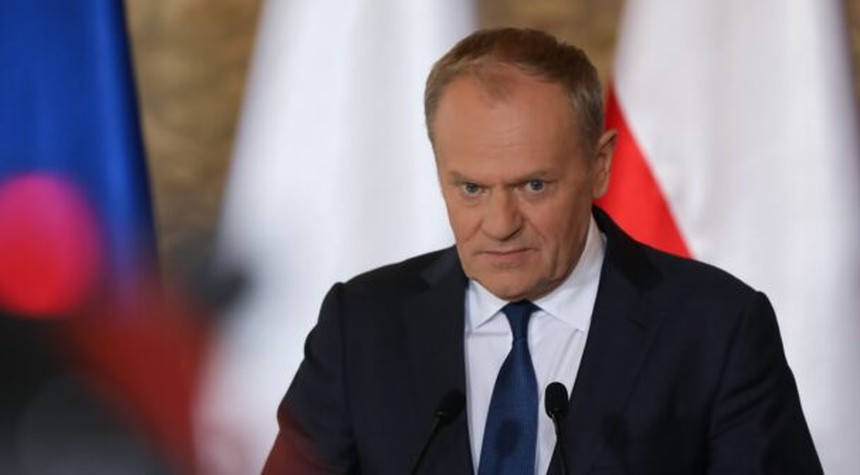
The North Atlantic Treaty Organization faces what Polish Prime Minister Donald Tusk has characterized as a potential disintegration, following announcements of significant American troop redeployments across Europe.
The Pentagon confirmed Friday that approximately 5,000 American soldiers would be relocated from German bases over the coming year as part of a broader reorganization of forward-deployed forces. President Donald Trump indicated Saturday that the drawdown from Germany would likely exceed this initial figure, though he provided no specific numbers regarding the roughly 36,000 American troops currently stationed in that country.
The President has also raised the possibility of reducing American military presence in Italy and Spain, citing what he describes as insufficient cooperation from these nations regarding the ongoing conflict with Iran’s Islamist regime.
While the administration has made no indication of withdrawing from Poland, where some 8,500 American troops are presently stationed, Prime Minister Tusk has nevertheless sounded an alarm about the alliance’s future. In a statement, the Polish leader asserted that the greatest threat to the transatlantic community stems not from external adversaries but from internal fragmentation. He called upon all member states to take necessary action to reverse what he termed a disastrous trend.
These concerns follow Tusk’s public questioning of American commitment to European security. Speaking last week, he expressed uncertainty about whether Washington would honor Article 5 of the NATO treaty, which obligates member states to defend one another in the event of attack. This skepticism persists despite President Trump’s repeated assurances that the United States would fulfill its alliance obligations.
Tusk, who previously served as head of the European Council in Brussels, questioned whether the United States remains prepared to demonstrate the loyalty described in NATO treaties. While stating his desire to maintain optimism, he acknowledged harboring doubts and emphasized the need for practical demonstrations of commitment.
The Polish Prime Minister has emerged as a leading advocate for transforming the European Union into a comprehensive defensive alliance, potentially including a dedicated European military force. This represents a significant departure from the organization’s founding purpose as a framework for continental free trade.
Recent diplomatic efforts have seen Tusk meeting with French President Emmanuel Macron to discuss extending France’s nuclear deterrent across Europe, including the potential deployment of French nuclear weapons in Poland. Macron, approaching the conclusion of his final presidential term, has engaged in similar discussions with Germany and other major European powers regarding the stationing of French nuclear capabilities.
Germany has announced its own ambitions to develop Europe’s most powerful military force, though details remain forthcoming.
These developments underscore the complex recalibration of transatlantic security arrangements as European nations contemplate greater self-reliance in defense matters. The question of American commitment to European security, which has underpinned Western defense policy for seven decades, now faces scrutiny from allies who once considered that commitment unshakeable.
And that is the way it is.
Related: Trump Launches Project Freedom to Extract Commercial Ships from Strait of Hormuz