
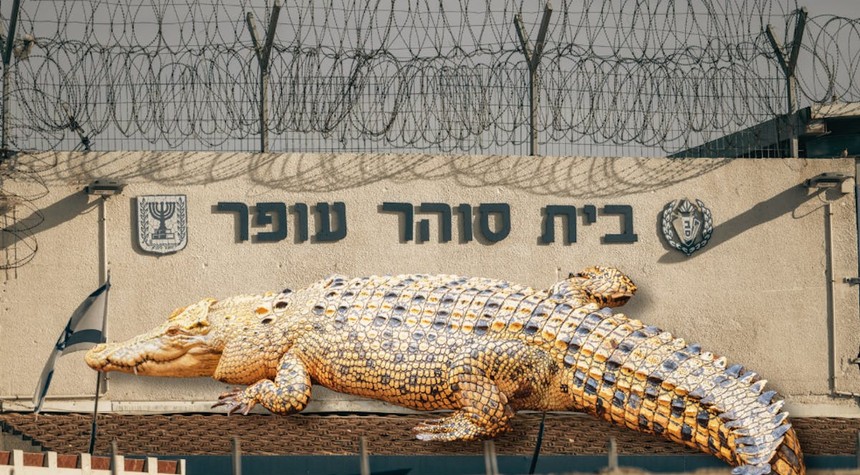
Israel has taken an extraordinary step in prison security that raises significant questions about both effectiveness and legal authority. Environmental Protection Minister Idit Silman this week reclassified crocodiles from wild animals to “cultivated wild animals,” a bureaucratic maneuver that could allow these apex predators to guard facilities housing Hamas operatives.
The regulation, implemented Wednesday, permits government officials to breed crocodiles provided they are maintained “in conditions determined by the Nature and Parks Authority director, to prevent their interference with nature.” The practical effect of this administrative change is far-reaching, potentially transforming Israel’s approach to prison security in ways that would have seemed unthinkable just months ago.
National Security Minister Itamar Ben-Gvir, who originally proposed the concept last year, has been vocal in his support. He announced the development on social media Thursday, including an artificially generated image of himself alongside a crocodile with a pointed message to potential escapees. Ben-Gvir’s primary target for implementation is Ketziot Prison, which currently houses numerous Hamas prisoners.
The choice of Nile crocodiles for this purpose is particularly noteworthy. These creatures rank among the world’s most dangerous animals, capable of reaching lengths of twenty feet and weights exceeding fifteen hundred pounds. Unlike most reptiles, Nile crocodiles actively hunt humans and prey on large mammals including hippos, zebras, and wildebeest. Their presence would undoubtedly serve as a formidable deterrent.
The inspiration for this plan reportedly comes from a historical American precedent. Alcatraz Federal Penitentiary, situated in San Francisco Bay, benefited from the natural presence of strong currents and, according to some accounts, alligators in surrounding waters that discouraged escape attempts. However, the comparison may be superficial at best.
Legal advisers within the Israeli government have raised substantial objections. Neta Drori, the Environmental Protection Ministry’s legal adviser, informed Minister Silman in June that no known precedent exists for using crocodiles as prison security measures. Drori’s research indicated that the American experiment was brief and ultimately abandoned, and that it occurred in regions where such animals already existed naturally in the wild.
More troubling, Drori noted that past crocodile breeding programs have resulted in escapes, with the animals subsequently threatening civilian populations. She further observed that while Prison Service officials claim readiness to ensure the animals’ welfare based on their experience with guard dogs, the organization possesses no expertise in managing dangerous wild animals of this nature.
Drori’s legal opinion concluded that regardless of the crocodile’s reclassification, Israeli law requires legislative approval before such animals can be deployed at prison facilities. This represents a significant procedural hurdle that cannot be circumvented through administrative action alone.
Minister Silman has rejected her own legal adviser’s opinion, citing testimony from senior officials who claim the existing bureaucratic framework provides sufficient authority to proceed. This disagreement highlights a concerning pattern of ministerial action potentially exceeding legal boundaries.
The Nature and Parks Authority is expected to convene shortly to examine the legality of the proposed program. The outcome of that meeting may determine whether this ambitious security measure proceeds or whether it represents governmental overreach that must be constrained by existing law.
The situation presents a test case for the balance between security imperatives and legal procedure in a nation that faces genuine threats while maintaining democratic institutions and the rule of law.
Related: Seventeen US Service Members Lost as Iran War Costs Reach $37.5 Billion